
The manual call point is activated, the panel lights up, but the building remains unexpectedly silent. A silent fire alarm system can be a serious cause for concern, and the period immediately following a failed fire alarm test is critical for rectifying the situation.
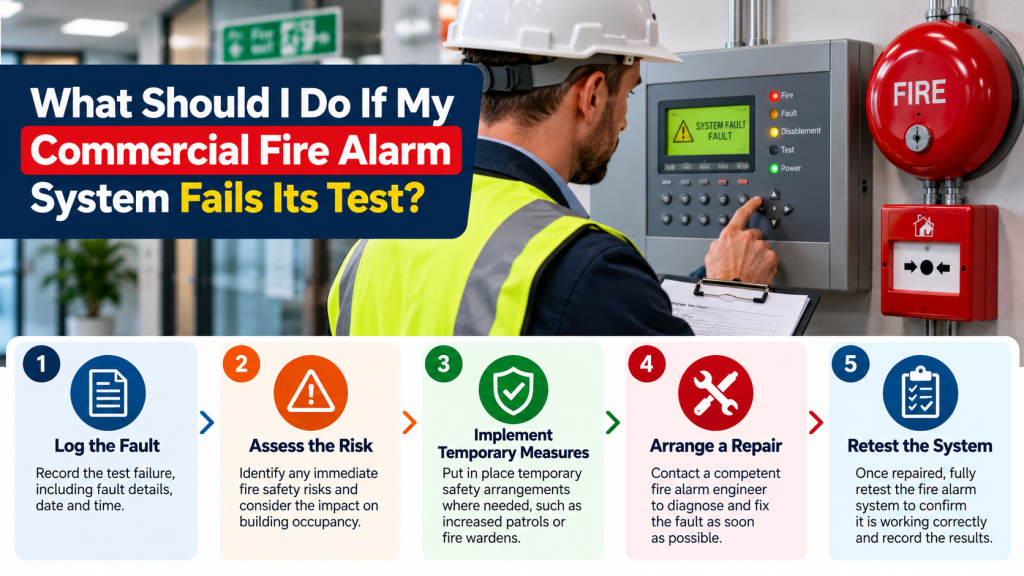
Record the fault as soon as possible, determine whether the fault affects a single component or the entire alarm system and ensure appropriate temporary safety measures are in place. Then contact an engineer and schedule the repair in writing.
What Should Be Noted First?
Write the date, time, zone, and nature of the alarm fault into your fire alarm logbook first. Repeatedly repairing the same fault without identifying its cause may leave an underlying safety issue unresolved.
Next, assess the severity of the fault, as its impact can vary considerably. Having one faulty detector is not the same as having no sounders at all on a certain floor. Sleeping zones and escape routes are especially dangerous when fire alarm faults occur there.
What Temporary Safety Measures Are Appropriate?
The appropriate response will be dependent on where the problem exists after a failed fire alarm inspection; therefore, select the appropriate measures after completing a risk assessment:
- Fire watch or waking watch patrols.
- Informing occupants of the building, the fire risk assessor, and the control room.
Who Will Conduct The Repairs?
Repairs must be undertaken by a certified contractor, such as one that is BAFE or NSI approved. All fire alarm remedial works should be recorded. Failure to meet the prearranged deadline will necessitate an escalation process or a second opinion.
What Fault Reporting Is Required?
There is an additional requirement for residential high-rise buildings in England, where there are two or more dwellings above 18 metres in height or two or more residential units across seven storeys. An alarm fault in the common parts which cannot be resolved within 24 hours needs to be notified electronically to the fire and rescue authority. A second notification needs to be sent after repair has been carried out.
How Do I Close The Fault?
Once the repairs have been completed, record the engineer’s details and obtain their signature, then resume normal operations in line with fire alarm testing regulations. Under BS 5839-1:2025, Code of Practice for non-domestic systems, this normally consists of weekly call point testing and six-monthly servicing, which sets the fire alarm testing frequency.
Specialist Assistance With Alarm Faults
Fire alarm testing and certification to BS 5839 complement commercial fire risk assessment in London, and fire door surveys are provided by Risk Assessment London. These services cover various premises, including offices, hotels and care facilities, while our annual maintenance packages ensure fire alarm testing is kept up.