
Fire Risk Assessment for Flats BS 9792:2025 Ready
Professional fire risk assessments for blocks of flats. Compliant with Fire Safety Act 2021, Building Safety Act 2022, and the new BS 9792:2025 standard. BAFE SP205 registered assessors serving freeholders, managing agents, RTM companies, and landlords across the UK.

Trusted & Accredited


Why Fire Risk Assessments for Flats Are Critical in 2025-2026
Post-Grenfell legislation has transformed fire safety requirements for residential blocks. Non-compliance now carries serious consequences.
The regulatory landscape has fundamentally changed. The Fire Safety Act 2021 clarified that fire risk assessments must now include external walls, balconies, and flat entrance doors. The Building Safety Act 2022 introduced the “Accountable Person” role for higher-risk buildings with stringent documentation requirements under Section 156. From August 2025, all assessments should follow the new BS 9792:2025 standard, and Residential PEEPs become mandatory for high-rise buildings from April 2026. Fire authorities are actively enforcing—over 10,000 enforcement actions were taken in 2024-2025 alone. Is your block compliant?
Our Comprehensive Flats Assessment Process
Thorough evaluations covering every aspect of fire safety required by current legislation and the new BS 9792:2025 standard.
Communal Areas Inspection
Complete assessment of corridors, stairwells, lobbies, bin stores, plant rooms, and any other shared spaces for fire hazards and escape route adequacy
Fire Door Survey
Inspection of all communal fire doors and flat entrance doors—checking certification, gaps, seals, self-closers, and Fire Safety Regulations 2022 compliance
Compartmentation Review
Assessment of fire stopping, cavity barriers, service penetrations, and compartment integrity to ensure fire and smoke cannot spread between flats
External Wall Assessment
Fire Safety Act 2021 compliant review of external walls, cladding systems, insulation, and balcony construction where applicable
Detailed Report Delivery
BS 9792:2025 compliant report with risk ratings, photographic evidence, prioritised action plan, and ongoing compliance recommendations within 24 hours
6 Critical Fire Hazards in Flats We Assess
These specific risks require specialist knowledge of residential block fire safety that general assessors often miss.

External Walls and Cladding Systems
Fire Safety Act 2021 requirementFollowing the Grenfell Tower tragedy, the Fire Safety Act 2021 clarified that fire risk assessments must include external walls, including cladding, insulation, and balcony construction. Many blocks have combustible materials that were compliant when installed but now present unacceptable risks. External wall fires can spread rapidly, bypass internal compartmentation, and compromise evacuation strategies. Buildings over 11 metres face particular scrutiny, and insurers increasingly require external wall assessments before providing cover.
Fire Doors and Self-Closing Devices
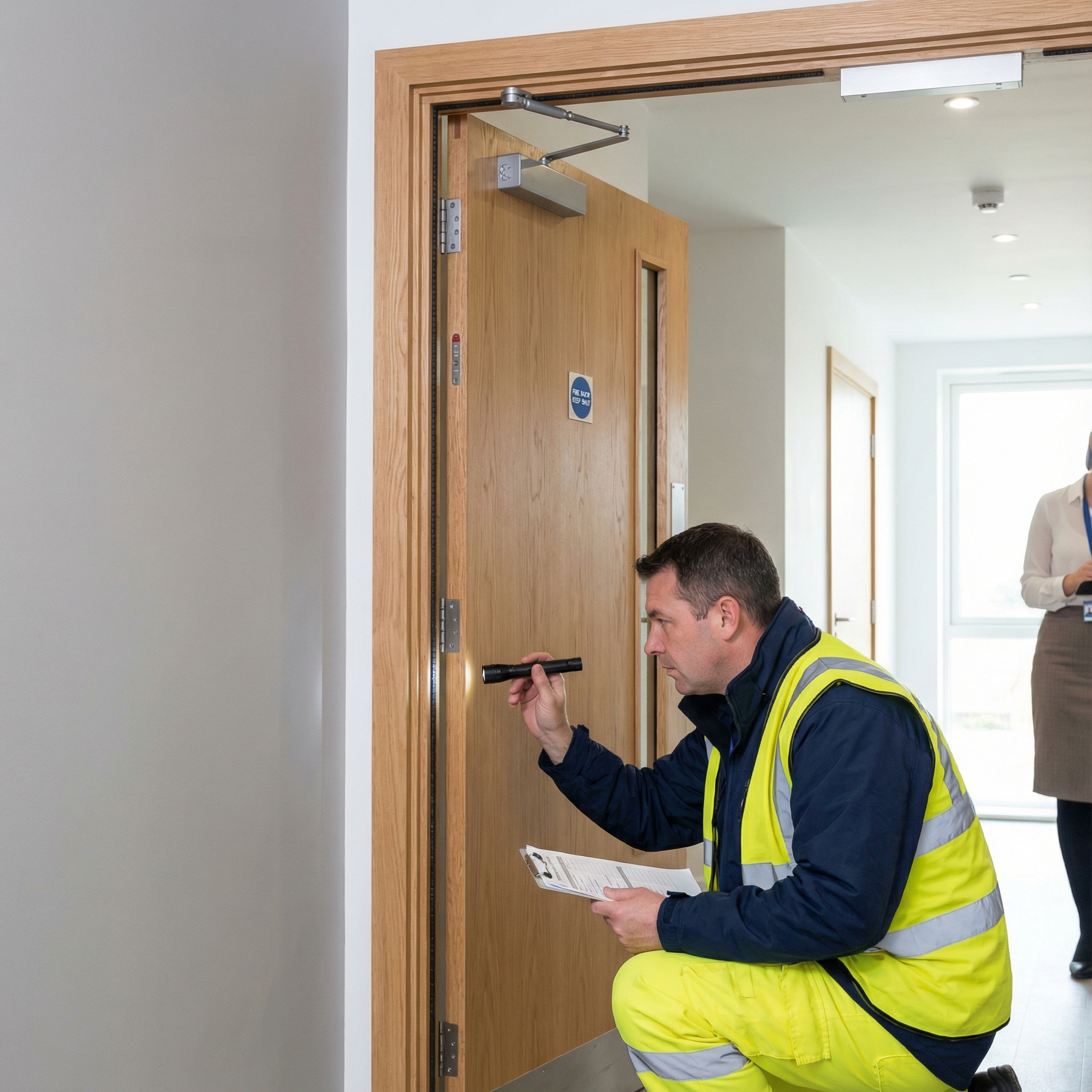
10,323 enforcement actions in 2024-2025Fire doors are your building’s primary defence, containing fire and smoke within compartments to protect escape routes and give residents time to evacuate safely. The Fire Safety (England) Regulations 2022 introduced mandatory quarterly inspections of communal fire doors and annual inspections of flat entrance doors in buildings over 11 metres. Self-closing devices are now required on all flat entrance doors under the Fire Safety Act 2021. Defective fire doors are the single most common enforcement issue—responsible for over 10,000 enforcement actions last year alone.

Compartmentation Breaches
Critical for stay-put strategy effectivenessCompartmentation divides buildings into fire-resistant sections, preventing fire and smoke spread between flats and protecting escape routes. Breaches commonly occur at service penetrations (pipes, cables, ventilation), within ceiling and wall voids, around meter cupboards, at structural joints, and where modifications have been made without proper fire stopping. In blocks relying on stay-put evacuation, compromised compartmentation can turn a contained flat fire into a building-wide emergency, endangering residents who remain in their homes expecting the fire to be contained.

Blocked and Compromised Escape Routes
Most common fire safety deficiencyEscape routes in residential blocks must be kept clear, adequately lit, and free from fire hazards at all times. Common issues include storage in corridors and stairwells, bicycles and pushchairs blocking routes, combustible materials increasing fire load, failed or inadequate emergency lighting, missing or incorrect fire safety signage, locked or obstructed final exits, and accumulation of rubbish. These issues are often the result of poor management practices rather than building deficiencies, making ongoing compliance as important as the initial assessment.

Incorrect Evacuation Strategy
Stay put vs simultaneous evacuationThe correct evacuation strategy is fundamental to resident safety, yet many blocks operate the wrong strategy for their building type. Purpose-built blocks with adequate compartmentation typically use “stay put,” where only affected residents evacuate while others remain safely in their flats. Converted buildings, those with compromised compartmentation, or buildings with communal alarm systems often require “simultaneous evacuation” where everyone leaves immediately. Using the wrong strategy can either cause unnecessary evacuation panic or leave residents in danger when they should be leaving. New Residential PEEP regulations from April 2026 add further complexity for high-rise buildings.
Missing Resident Fire Safety Information
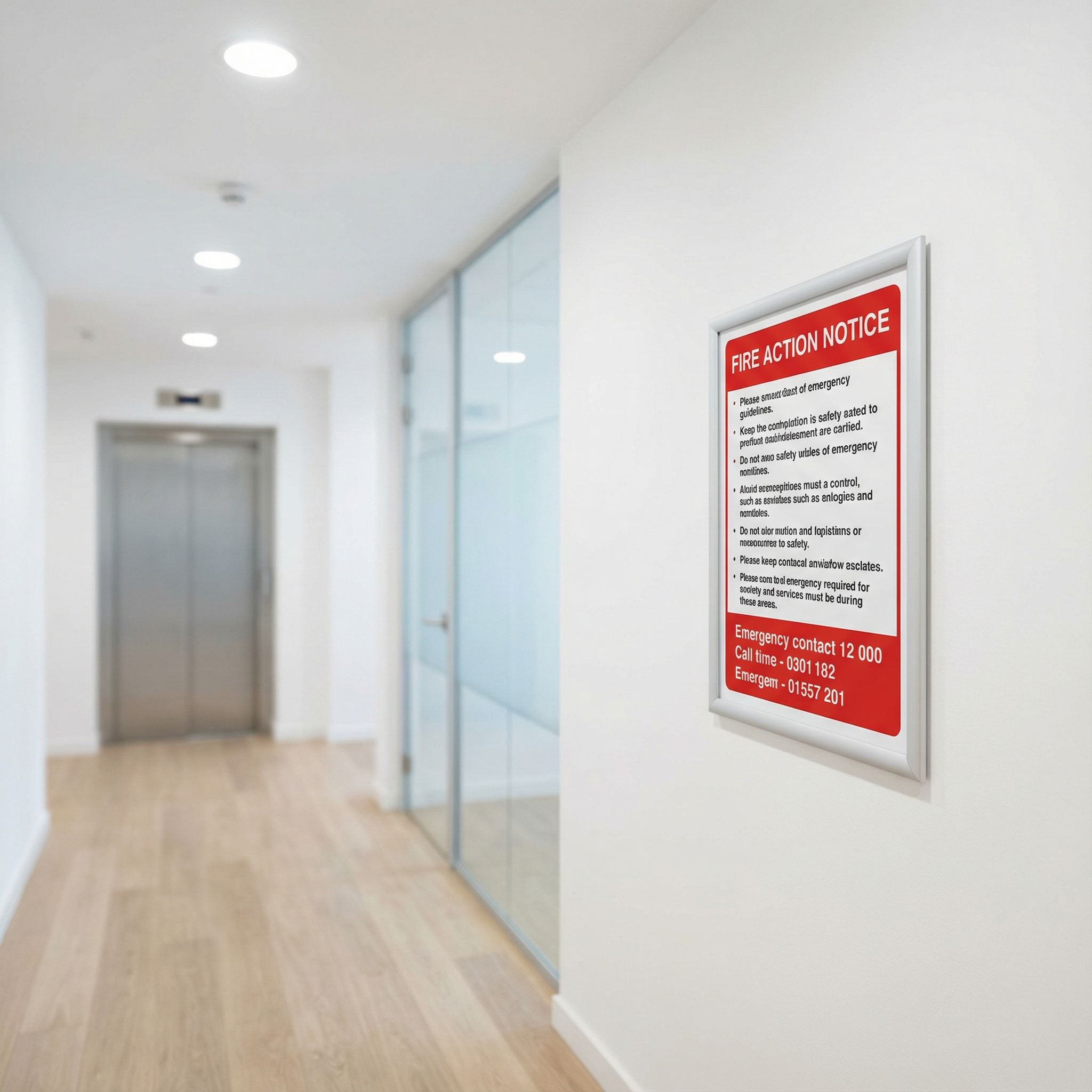
Regulation 9 Fire Safety Order requirementResidents must understand what to do in a fire emergency—yet many blocks fail to provide clear, accurate information. Regulation 9 of the Fire Safety Order requires Responsible Persons to provide comprehensible fire safety information to all residents. The Fire Safety (England) Regulations 2022 strengthened requirements for buildings over 11 metres, mandating information about evacuation strategy, fire doors, and building fire safety measures. For high-rise buildings, Section 156 of the Building Safety Act requires maintaining a “golden thread” of building safety information. Many blocks still display outdated notices with incorrect evacuation advice.
Complete Fire Risk Assessment Package for Flats
Everything required for full compliance with current legislation and the new BS 9792:2025 standard.
Communal Area Assessment
Comprehensive evaluation of all shared spaces including corridors, stairwells, lobbies, bin stores, plant rooms, car parks, and external communal areas for fire hazards and escape route adequacy.
Fire Door Inspection
Detailed survey of all communal fire doors and flat entrance doors checking certification, fire rating, gaps, seals, self-closers, and compliance with Fire Safety (England) Regulations 2022 inspection requirements.
Compartmentation Survey
Visual assessment of fire stopping at service penetrations, riser cupboards, and compartment boundaries, identifying breaches that could compromise the stay-put strategy and allow fire spread between flats.
External Wall Review
Fire Safety Act 2021 compliant visual assessment of external walls, cladding systems, balconies, and attachments with recommendations for specialist surveys where combustibility concerns are identified.
Fire Detection & Alarm Systems
Review of fire detection coverage, alarm system type and grade, manual call point locations, alarm testing records, and system adequacy for the building’s evacuation strategy and resident notification needs.
Emergency Lighting Assessment
Evaluation of emergency lighting coverage, duration, and positioning throughout escape routes, plus review of testing and maintenance records against BS 5266-1 requirements.
Evacuation Strategy Review
Determination and documentation of correct evacuation strategy (stay-put or simultaneous) based on building construction and compartmentation, plus assessment of resident information accuracy and PEEP readiness.
Management Systems Review
Assessment of fire safety management including maintenance schedules, testing records, contractor competency, resident communication, and incident response procedures against responsible person duties.
BS 9792:2025 Compliant Report
Professional report following new BS 9792:2025 methodology with clear risk ratings, photographic evidence, prioritised action plan, compliance timeline, and ongoing management recommendations—delivered within 24 hours.
Why Property Managers Choose Firerisk.io
Specialist knowledge of residential block fire safety trusted by freeholders, managing agents, and RTM companies across the UK.
BAFE SP205 Registered Assessors
Third-party certified competence recognised by fire authorities and insurers. BAFE SP205 registration demonstrates our assessors meet rigorous qualification, experience, and quality management standards. Your assessment will be conducted by genuinely competent professionals, not unqualified individuals trading on fire safety fears.
Residential Block Specialists
We understand the unique challenges of managing fire safety in blocks of flats—from navigating leaseholder relationships to implementing stay-put strategies and meeting Building Safety Act requirements. Our assessors have extensive experience with purpose-built blocks, converted buildings, high-rise and medium-rise residential, and mixed-use developments.
24-Hour Report Turnaround
Fire authority enforcement notice? Lender requiring urgent documentation? We deliver complete, BS 9792:2025 compliant reports within 24 hours of assessment. No waiting weeks while compliance deadlines approach—get the documentation you need to demonstrate responsible person duties are being met.
Practical, Prioritised Action Plans
Clear guidance on what needs doing first, not just a list of every possible issue. Our reports prioritise actions by risk level and compliance urgency, include realistic timescales, and consider budget constraints. We help you develop a defensible programme of fire safety improvements that demonstrates ongoing compliance effort.
Fire Risk Assessment for Flats FAQs
Common questions from freeholders, managing agents, RTM companies, and landlords about fire safety in residential blocks
Get Your Block Compliant Before Enforcement Catches Up
With over 10,000 fire safety enforcement actions taken in 2024-2025 and new BS 9792:2025 standards now in effect, the time to act is now. Protect your residents, your building, and your legal position with a professional fire risk assessment.
Protect Your Residents. Meet Your Legal Duties.
Join freeholders, managing agents, and RTM companies across the UK who trust Firerisk.io for compliant fire risk assessments. Get your free quote today.
Get Your Free Quote Now