
Table of Contents
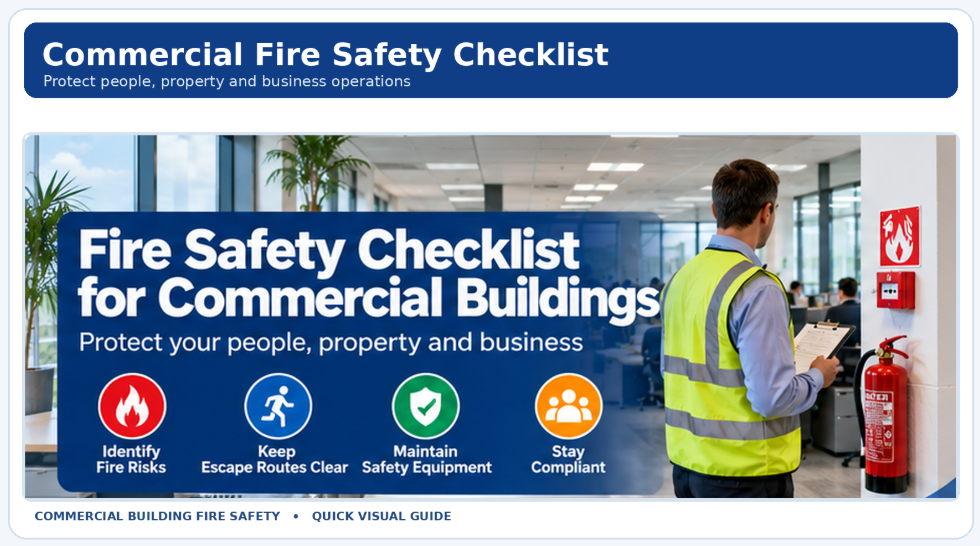
Fire safety is an important responsibility for every business owner, landlord, employer and building manager. Offices, shops, warehouses, restaurants and other commercial properties may contain electrical equipment, heating systems, flammable materials and other potential sources of fire. Without proper safety measures, a small incident can quickly become a serious emergency.
A commercial building fire safety checklist helps you identify potential hazards, check fire protection equipment and make sure employees, visitors and contractors can leave the building safely during an emergency. Regular inspections and good safety practices can also reduce property damage, business disruption and risks to human life.
Whether you manage a small office or a large commercial building, effective fire safety measures are essential for protecting people and property. This guide covers the key checks needed to identify hazards, maintain safety equipment and improve fire safety across commercial premises.
Why Is Fire Safety Important in Commercial Buildings?
Commercial buildings have different fire risks depending on their size, layout and daily activities. An office may have overloaded sockets, while a warehouse may store large amounts of packaging or combustible materials. Restaurants may face additional risks from cooking equipment, grease and extraction systems.
Get a Fire Risk AssessmentUnderstanding these fire risks allows businesses to identify potential hazards and take preventive action before an incident occurs. Good fire safety planning protects people, supports business continuity and helps those responsible for a building meet their legal duties.
In England and Wales, the Regulatory Reform (Fire Safety) Order 2005 places fire safety responsibilities on the relevant responsible person. These responsibilities include carrying out a suitable fire risk assessment and maintaining appropriate fire precautions.
Commercial Building Fire Safety Checklist: Key Areas to Check
Use the following checklist as a starting point for routine inspections. The exact requirements will depend on the building, its use, the people who occupy it and the findings of its fire risk assessment.
|
Fire Safety Area |
What Should Be Checked? |
|
Fire Hazards |
Electrical equipment, heating systems and flammable materials |
|
Fire Exits and Escape Routes |
Clear corridors, stairways, emergency exits and exit signs |
|
Fire Alarms and Detection |
Fire alarm panels, detectors, testing and servicing records |
|
Fire Extinguishers |
Equipment accessibility, condition and maintenance |
|
Fire Doors |
Door closers, hinges, seals and visible damage |
|
Housekeeping |
Waste disposal, combustible materials and safe storage |
|
Emergency Evacuation |
Escape routes, assembly points and evacuation procedures |
|
Employee Training |
Fire safety awareness, fire wardens and emergency responsibilities |
|
Inspections and Maintenance |
Equipment servicing, safety records and corrective actions |
1. Identify and Control Potential Fire Hazards
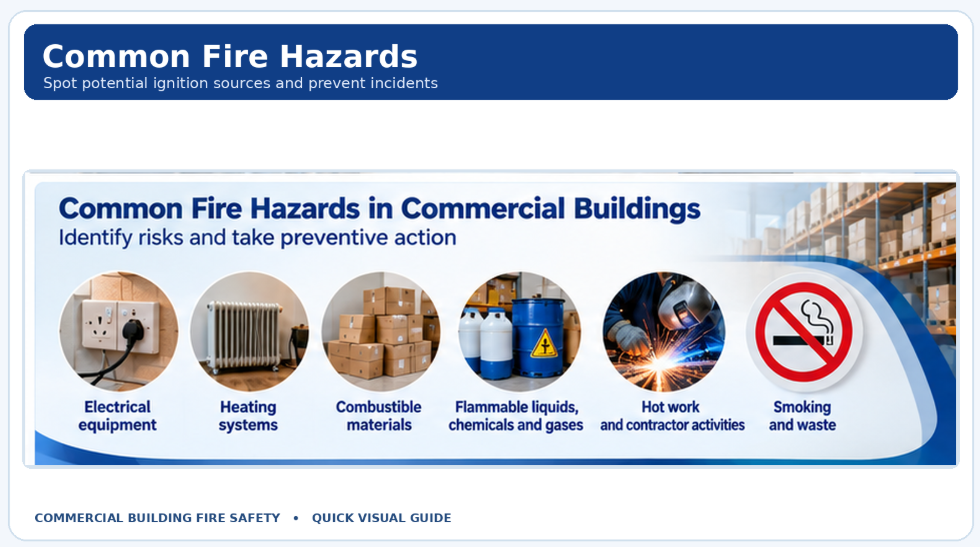
The first step in commercial fire prevention is to identify anything that could start a fire or help it spread.
Check the following areas:
- Inspect electrical equipment, plugs, sockets and cables for visible damage.
- Avoid overloading sockets or relying on unsafe extension leads.
- Arrange appropriate inspections and maintenance of electrical installations.
- Check heating systems and portable heaters for safe positioning and operation.
- Keep combustible materials away from hot surfaces, sparks and other ignition sources.
- Store flammable liquids, chemicals and gases safely, following relevant requirements.
- Make sure smoking arrangements are controlled and cigarette waste is disposed of safely.
- Check contractor activities, including welding, grinding and other hot work, before work begins.
These checks are particularly important in warehouses, workshops, kitchens and commercial buildings with high electrical demand. Identifying hazards early can help reduce the likelihood of a fire starting.
2. Keep Fire Exits and Escape Routes Clear
Employees and visitors must be able to leave the building safely if a fire occurs. Blocked corridors, locked emergency exits and poorly maintained stairways can delay evacuation.
Include these checks in your commercial building fire safety checklist:
- Keep corridors, stairways and escape routes free from boxes, furniture and stored items.
- Make sure fire exits can be opened easily and immediately when required.
- Check that exit doors are not blocked by deliveries, waste or equipment.
- Ensure fire exit signs are visible and easy to understand.
- Check that emergency lighting works and illuminates escape routes where required.
- Keep external escape routes and final exits clear.
- Make sure fire doors close correctly and are not wedged open.
- Check that doors, corridors and stairways remain suitable for the building’s evacuation arrangements.
Clear escape routes are one of the most important parts of fire safety in commercial premises. Even a well-equipped building may be unsafe if people cannot find or reach an exit quickly.
3. Inspect Fire Alarms and Detection Systems
Fire alarms provide an early warning that allows people to begin evacuating. Smoke and heat detectors can help identify a fire before it spreads, depending on the system and the location of the incident.
As part of your inspection routine:
- Check that the fire alarm control panel shows normal operation.
- Arrange regular alarm testing according to the system’s instructions and applicable guidance.
- Ensure detectors are not covered, damaged or obstructed.
- Check that alarm sounders and visual warning devices work where fitted.
- Arrange servicing and maintenance by competent professionals.
- Record test results, faults and any corrective work.
If a fault is identified, report it promptly and arrange suitable action. Where a fire alarm system is impaired, follow the building’s fire safety procedures and obtain competent advice on any additional precautions needed.
4. Check Fire Extinguishers and Other Firefighting Equipment
Fire extinguishers, fire blankets and fixed firefighting systems can support fire response when suitable for the premises and the type of fire. However, employees should only attempt to tackle a small fire if they are trained, it is safe to do so, and their escape route remains clear. Evacuation must take priority when conditions are dangerous.
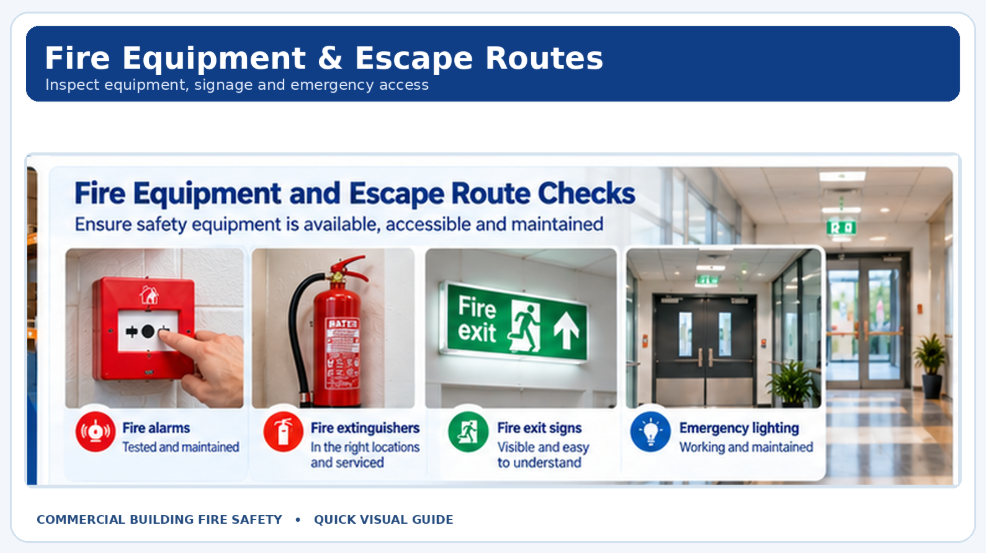
Check that:
- Suitable fire extinguishers are available in the required locations.
- Equipment is visible, accessible and correctly identified.
- Extinguishers show no obvious signs of damage or leakage.
- Inspection and servicing requirements are followed.
- Fire blankets and other installed equipment are maintained where provided.
- Staff understand the purpose of the equipment and when not to use it.
Do not move or remove firefighting equipment without an appropriate replacement or safety arrangement. Keep records of inspections, servicing and faults so that problems can be addressed promptly.
5. Maintain Fire Doors and Fire-Resisting Features
Fire doors and other fire-resisting features help limit the spread of smoke and fire. Their condition is important because damaged doors, missing seals or poorly fitted components may reduce their effectiveness.
Include the following checks:
- Look for visible damage to fire doors, frames, hinges and seals.
- Check that doors close properly without being forced or obstructed.
- Make sure self-closing devices work where fitted.
- Do not wedge fire doors open unless an approved arrangement is installed and maintained.
- Report damaged doors or missing components for appropriate inspection and repair.
- Avoid making unauthorised changes to fire doors, walls or other fire-resisting structures.
These checks are especially important in multi-storey buildings, shared commercial premises and buildings where escape routes pass through protected corridors or stairways.
6. Follow Good Fire Safety Housekeeping Practices
Poor housekeeping can increase the risk of fire and allow flames to spread more quickly. Cardboard boxes, packaging, paper waste and other combustible materials can create additional fuel when left near electrical equipment or heat sources.
Effective fire safety housekeeping practices should include:
- Remove rubbish and combustible waste regularly.
- Keep storage areas tidy and avoid unnecessary stock accumulation.
- Store materials safely without blocking exits, fire doors or firefighting equipment.
- Keep electrical cupboards, plant rooms and escape routes free from unsuitable storage.
- Clean kitchen areas and extraction systems according to appropriate maintenance schedules.
- Store chemicals and flammable products in suitable locations.
- Make sure waste bins are managed safely and do not create avoidable risks near the building.
- Keep deliveries and temporary storage away from emergency exits.
Following effective fire safety housekeeping practices helps businesses manage combustible materials, maintain clear escape routes and reduce preventable hazards. Regular checks also make fire safety inspections and ongoing maintenance easier.
7. Prepare an Emergency Evacuation Plan
Every commercial building should have suitable arrangements for responding to a fire. Employees need to know how the alarm is raised, which routes to use and where to go after leaving the building.
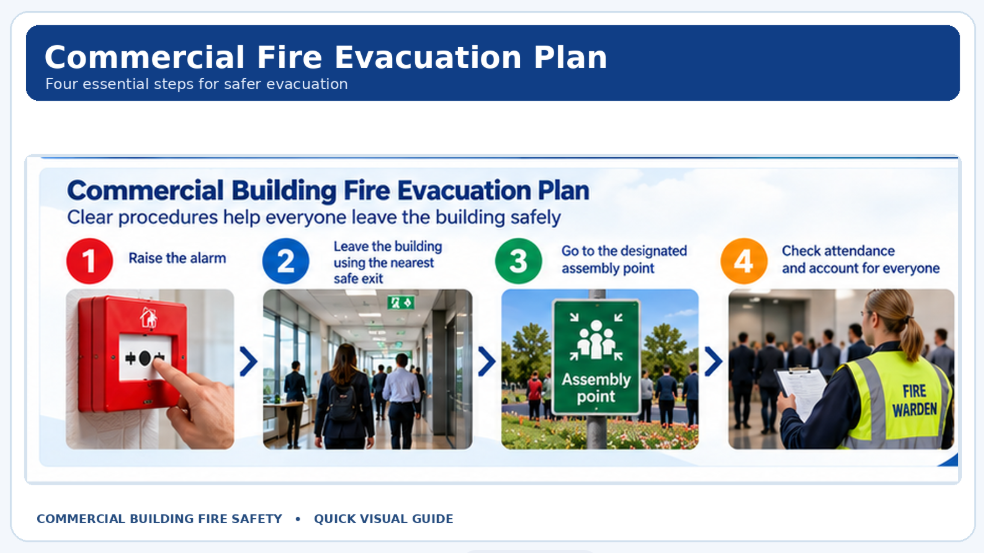
Your evacuation plan should cover:
- The procedure for raising the alarm and contacting the fire and rescue service.
- Primary and alternative escape routes, where appropriate.
- A designated assembly point in a safe location.
- The responsibilities of the fire marshal and other appointed staff.
- Arrangements for visitors, contractors and people who may need assistance.
- Procedures for checking that people have reached safety, without putting staff at risk.
- The process for reporting missing persons and communicating with emergency responders.
Display clear fire action notices where appropriate and make sure new employees receive relevant instructions. Businesses should carry out fire drills at appropriate intervals based on their fire risk assessment and relevant guidance. Annual drills are generally recommended, although some premises may require more frequent exercises. The results should be recorded and used to improve evacuation procedures.
8. Provide Fire Safety Training for Employees
Fire safety is not only the responsibility of the building manager. Employees also need to understand the procedures that apply to their workplace.
Training should explain how to recognise common fire hazards, report faults, raise the alarm and evacuate safely. Staff should also know why fire exits must remain clear and why fire doors should not be propped open.
Consider providing additional instruction to designated fire wardens and employees with specific emergency responsibilities. Temporary staff, contractors and new starters should receive appropriate information before carrying out relevant activities. Regular training supports better commercial fire safety measures because employees are more likely to recognise unsafe conditions and take the correct action.
9. Record Inspections and Arrange Regular Maintenance
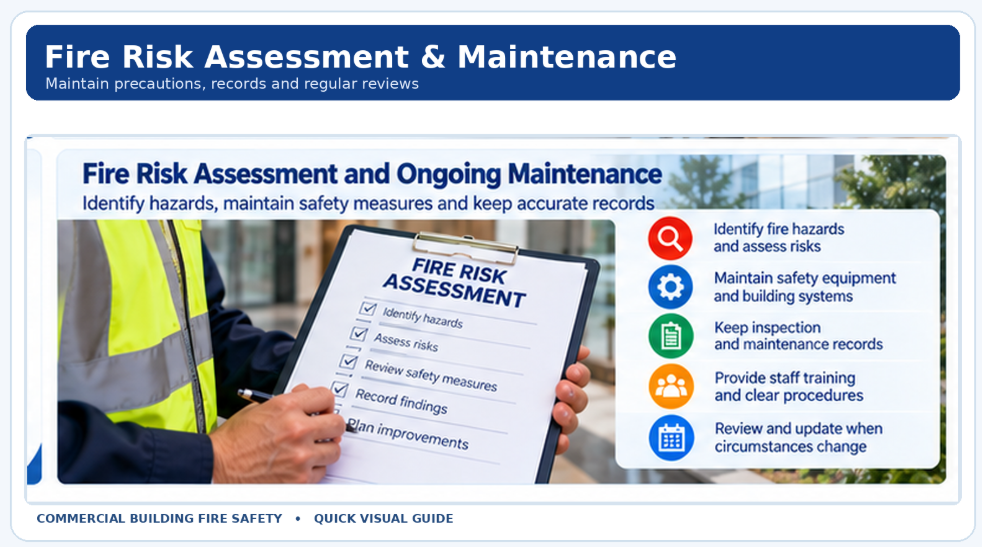
Checking equipment is useful only when faults are recorded and resolved. A clear maintenance schedule helps building managers track routine inspections and identify overdue work.
Your records should include:
- Fire alarm tests and servicing.
- Emergency lighting checks and maintenance.
- Fire extinguisher inspections and servicing.
- Fire door inspections and repairs.
- Staff training and evacuation drill dates.
- Reported hazards and the actions taken to address them.
- Fire risk assessment findings and review dates.
Inspection frequency should follow the relevant regulations, system requirements, manufacturer instructions and the building’s risk assessment. Avoid assuming that every piece of equipment has the same testing schedule.
Why Do You Need a Fire Risk Assessment for a Commercial Building?
A checklist is useful for routine checks, but it cannot replace a suitable fire risk assessment. A fire risk assessment considers how a fire could start, who might be harmed, how fire could spread and whether the existing precautions are adequate.
Need a Professional Fire Risk Assessment?
Get expert support identifying fire hazards, reviewing safety measures and prioritising improvements across your commercial premises.
Request a Free QuoteA suitable assessment should consider the building’s layout, occupancy, work activities, escape routes, fire detection, emergency lighting, fire doors and firefighting equipment. It should also identify improvements, assign responsibility for actions and set appropriate timescales.
A professional fire risk assessment from Risk Assessment LTD can help businesses identify fire hazards, review existing safety measures and prioritise necessary improvements.
Where a building has a complex layout, several occupiers, vulnerable occupants or higher-risk activities, a competent fire risk assessor can help evaluate the risks and recommend appropriate measures.
When Should You Review Your Commercial Fire Safety Checklist?
Fire safety checks should form part of everyday building management rather than being completed only before an inspection. Review your checklist and related arrangements:
- During routine daily or weekly checks, as appropriate for the item.
- After changes to the building layout or escape routes.
- When new equipment, materials or work processes are introduced.
- After a fire, near miss or significant safety concern.
- When occupancy levels or the needs of building users change.
- When an inspection identifies a fault or a maintenance task is overdue.
- When reviewing the fire risk assessment or emergency arrangements.
A regular review helps ensure that commercial property fire safety arrangements remain suitable as the building and its use change.
What Is a Fire Safety Strategy Report?
A fire safety strategy explains the fire safety approach for a building, including relevant design features, fire protection measures and evacuation arrangements. It can be particularly important for new buildings, major refurbishments and complex premises, depending on the project’s requirements.
A fire safety strategy report can help you understand the information typically covered in a fire strategy document. It should be prepared or reviewed by suitably competent professionals to reflect the building’s design, use and applicable requirements.
A strategy document and a fire risk assessment serve different purposes. A fire strategy generally addresses the building’s fire safety design, while a fire risk assessment evaluates risks in the premises and the precautions needed to protect people.
School Fire Safety Checklist: What Should Be Considered?
Educational buildings have additional fire safety considerations, including classroom hazards, laboratories and evacuation arrangements for pupils requiring assistance. Schools should use a dedicated school fire safety checklist that reflects the building’s activities, occupants and specific risks.
How Risk Assessment LTD Can Help with Commercial Fire Safety
Maintaining fire safety requires more than checking a few items on a list. Businesses need to identify hazards, keep safety equipment in good condition, train staff and review their arrangements as circumstances change.
Risk Assessment LTD offers professional fire risk assessments for commercial premises, helping businesses identify potential hazards, review existing safety measures and prioritise necessary improvements. Assessments can support safer working environments and help responsible persons meet their fire safety obligations.
Whether you manage an office, retail unit, warehouse or another commercial property, professional support can help you make informed decisions about fire safety and prioritise improvements based on the risks identified.
Conclusion
Maintaining fire safety in commercial buildings requires regular inspections, effective safety measures and clear emergency procedures. A commercial building fire safety checklist helps business owners, landlords and building managers identify potential hazards, check essential equipment and maintain safe escape routes.
From electrical inspections and fire alarm maintenance to staff training and evacuation planning, every precaution plays an important role in protecting employees, visitors and property.
Frequently Asked Questions
What should a commercial building fire safety checklist include?
It should cover fire hazards, electrical safety, escape routes, fire doors, alarms, emergency lighting, firefighting equipment, housekeeping, staff training, evacuation procedures and maintenance records. The checklist should be adapted to the building’s specific risks.
How often should fire safety checks be carried out in commercial buildings?
The frequency depends on the equipment, applicable requirements, manufacturer instructions and the building’s fire risk assessment. Some checks may be needed daily or weekly, while other inspections and servicing take place monthly, annually or at other specified intervals.
Is a fire risk assessment required for commercial buildings in the UK?
In England and Wales, the responsible person must carry out a suitable and sufficient fire risk assessment for relevant non-domestic premises. The assessment should be reviewed when there is reason to believe it is no longer valid or after significant changes.
Why is fire safety housekeeping important?
Good housekeeping reduces avoidable fire hazards by keeping combustible waste under control, separating materials from ignition sources and ensuring escape routes and firefighting equipment remain accessible.
Can a checklist replace a professional fire risk assessment?
No. A checklist supports routine inspections, but it does not automatically identify every hazard or satisfy the requirements of a suitable fire risk assessment. A competent person should assess the premises and determine the precautions needed.