
An emergency light that fails midway through a duration test may seem less concerning in a brightly lit corridor. However, during a power cut at night, occupants may struggle to find their way to safety.
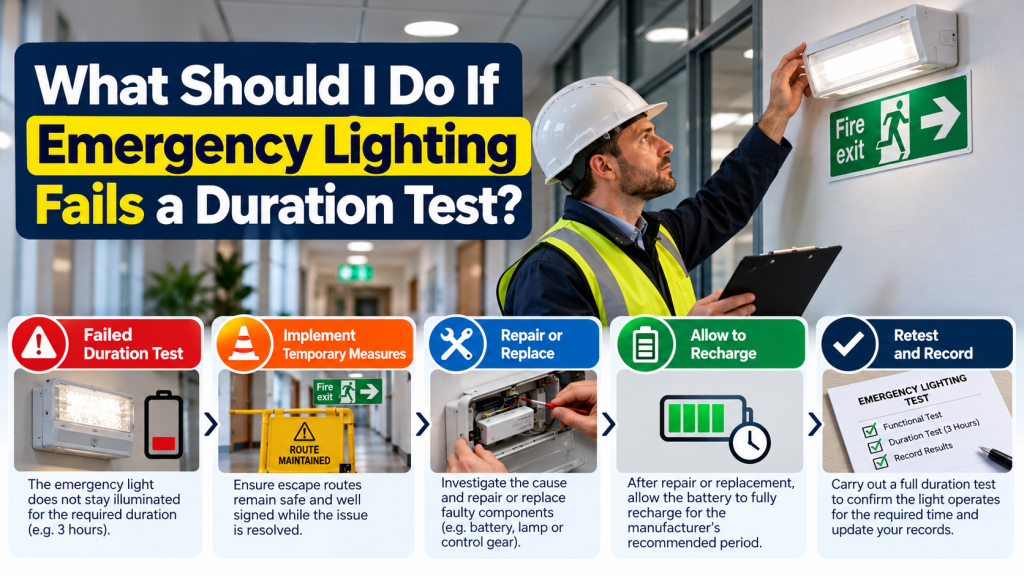
Treat a failed emergency lighting duration test primarily as an escape route safety issue. Put temporary measures in place and have a qualified engineer diagnose the problem. Once the necessary emergency lighting repairs have been completed, the system should be tested again against its rated duration before the fault is marked as resolved in the logbook.
How Serious Is One Failing Light?
First, identify the affected light fitting and escape route. Staircases, passageways, and exits should be prioritised in this respect. A single failed light shouldn’t shut down the entire building; however, the decision should take account of how frequently the route is used.
What Temporary Measures Can Be Introduced?
- Limit entry into this area.
- Relocate occupants or use an alternative escape route outlined in the fire evacuation plan.
- Use temporary lighting, but only after a competent person says it is safe to do so.
What Are the Common Causes of Emergency Lighting Failure?
Emergency lighting batteries may wear out more quickly due to heat, frequent discharging and poor charging conditions. Battery deterioration is a common cause of emergency lighting failure.
How Long Should the Retest Last?
It depends on the design of the system, with emergency light testing taking three hours in most cases and one hour in some specified areas. If a light fitting has been repaired, before retesting, the fitting should be charged for the required period in accordance with the manufacturer’s instructions.
What Should Be Entered In The Logbook?
Enter the date, fitting reference number, location, risk assessment, temporary control measures, repair details, retesting results, and the date interim control measures were withdrawn. Multiple failures in the same area should be recorded in the fire risk assessment, as other fittings of a similar age may also fail.
Making Sure That The Escape Routes Remain Illuminated
Risk Assessment London conducts emergency lighting testing according to BS 5266 and the emergency lighting regulations and issues certificates of conformity. The company’s record in fire risk assessment services includes more than 512 completed projects, involving shops, schools and warehouses. Visits can be arranged at a convenient time for the client.