

Table of Contents
Table of Contents
- Introduction: Why This Distinction Could Save Your Business
- Quick Comparison: Fire Strategy vs Fire Risk Assessment
- What is a Fire Strategy?
- What is a Fire Risk Assessment?
- Key Differences Explained
- When You Need Each Document
- Legal Requirements and Compliance
- Professional Requirements and Qualifications
- Cost Comparison: Investment vs Compliance
- Common Mistakes and How to Avoid Them
- The Future of Fire Safety Documentation
- Conclusion: Getting Both Documents Right
Introduction: Why This Distinction Could Save Your Business
Understanding the difference between fire strategy and FRA (Fire Risk Assessment) is crucial for property owners, developers, and building managers across the UK. With 136,702 fires attended by UK fire services in 2024 and only 58% of fire safety audits deemed satisfactory, getting this distinction right isn’t just about compliance—it’s about saving lives.
Many property professionals confuse these two essential fire safety documents, potentially leaving their buildings non-compliant and occupants at risk. Whether you’re developing a new high-rise or managing an existing office block, knowing when you need a fire strategy versus a fire risk assessment could be the difference between legal compliance and criminal prosecution.
The consequences of getting this wrong are severe. Just last month, a Manchester property developer faced unlimited fines after failing to provide adequate fire strategy documentation for a 12-storey residential building. Meanwhile, a Birmingham office complex was served with an enforcement notice for operating without a current fire risk assessment.
Quick Comparison: Fire Strategy vs Fire Risk Assessment
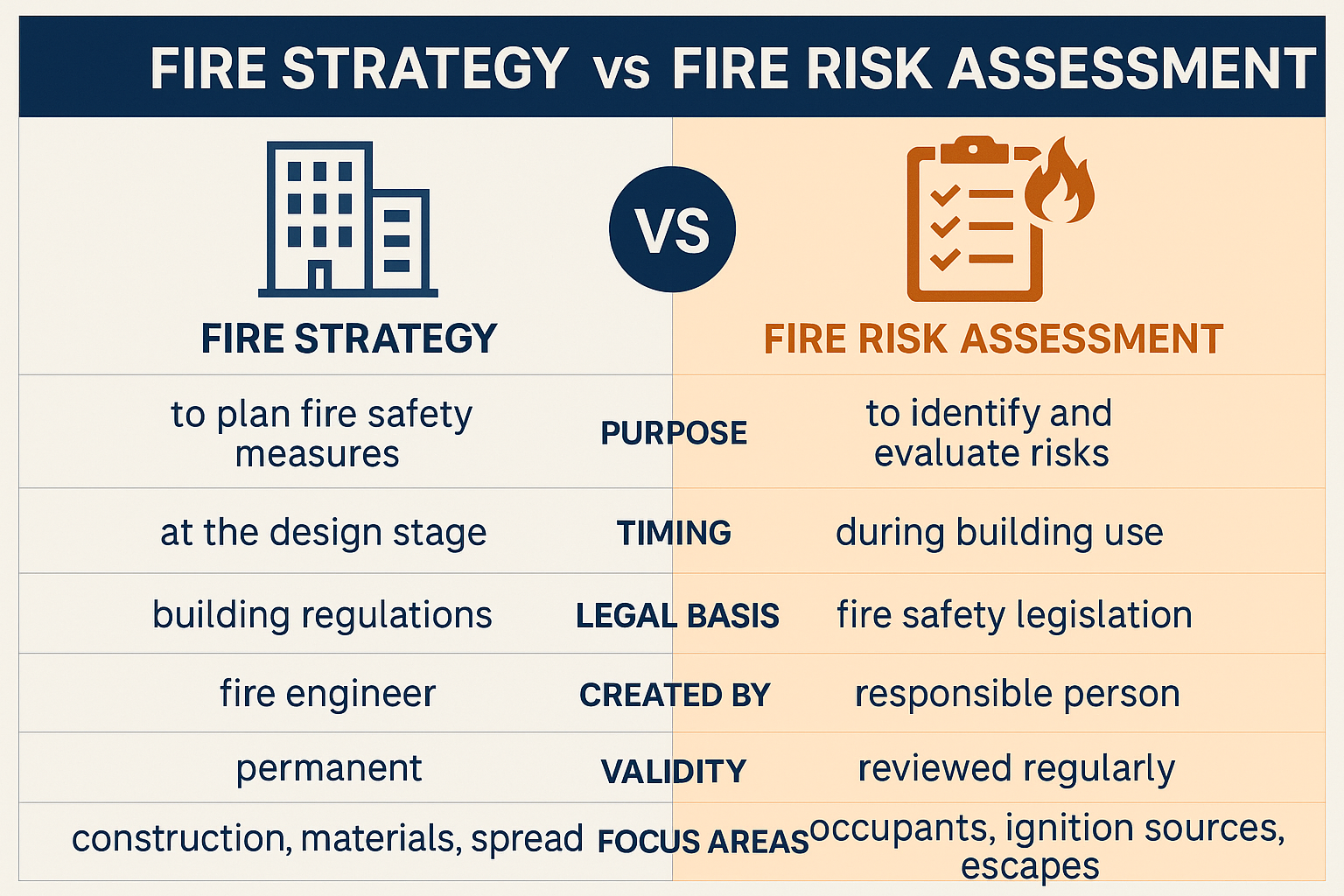
Before diving into the details, here’s what you need to know at a glance:
Fire Strategy is your building’s fire safety blueprint—created before construction begins, it establishes how the building will protect occupants through design and engineering solutions.
Fire Risk Assessment is your operational safety check—conducted after occupation, it evaluates real-world fire risks and ensures your fire safety measures work in practice.
Think of it this way: a fire strategy is like an architect’s plan for a house, while a fire risk assessment is like a home inspection after you move in.
The Legal Framework Difference
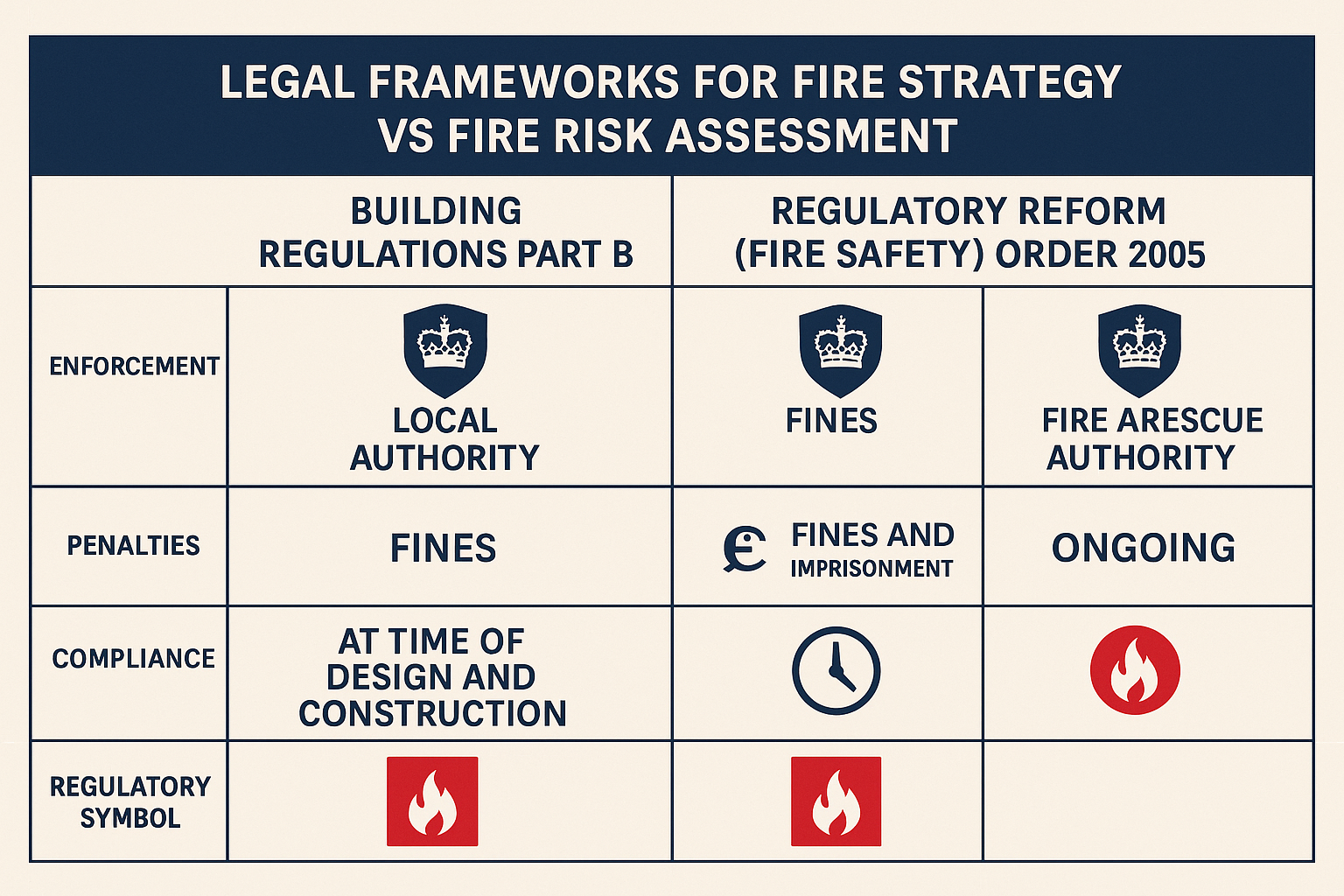
The legal requirements couldn’t be more different:
- Fire strategies fall under Building Regulations and are enforced by Building Control
- Fire risk assessments are mandated by the Regulatory Reform (Fire Safety) Order 2005 and enforced by Fire and Rescue Services
This means you’re dealing with different regulators, different penalties, and different compliance timelines for each document.
What is a Fire Strategy?
A fire strategy is a comprehensive technical document that establishes the fundamental fire safety principles for a building during its design and construction phase. Think of it as the blueprint for how a building will protect its occupants from fire before the first brick is laid.
When Fire Strategies Became Essential
The importance of fire strategies has intensified following several regulatory updates:
March 2024 Update: New buildings over 18m now require a second staircase, fundamentally changing fire strategy requirements for high-rise developments.
September 2025 Requirement: All new care homes must include sprinkler systems, adding another layer to fire strategy planning.
The Building Safety Regulator (BSR) Gateway Process now demands comprehensive fire strategies for all high-risk buildings, making them non-negotiable for developments over 18m or with seven or more storeys.
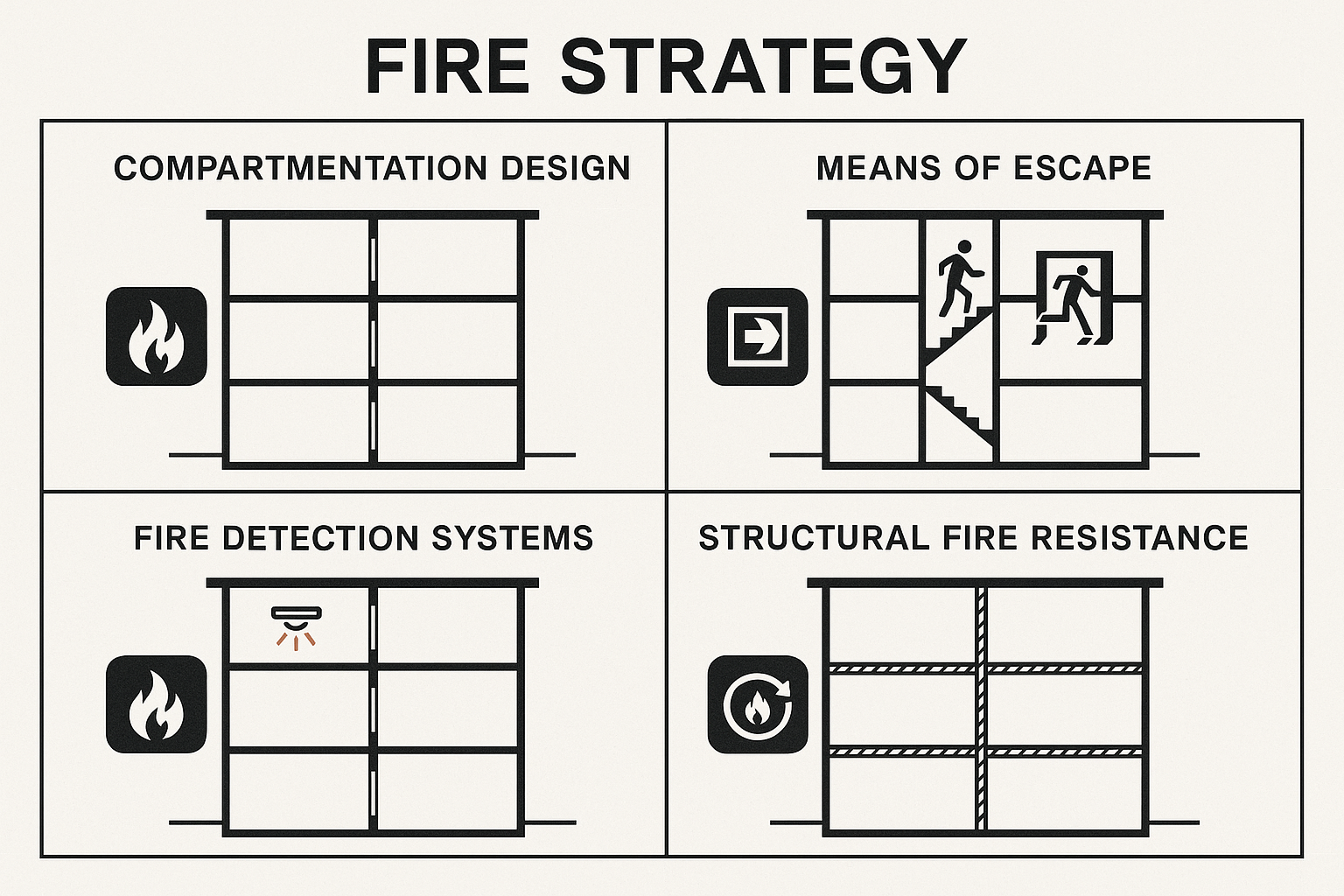
Core Components Every Fire Strategy Must Include
1. Compartmentation Design
The strategy outlines how the building will be divided into fire-resistant compartments to prevent fire spread. This includes specifications for:
- Fire-resistant walls and floors rated for specific time periods
- Protected stairways and corridors with appropriate fire doors
- Smoke control zones with mechanical ventilation systems
- Fire door requirements and locations throughout the building
2. Means of Escape Planning
Detailed planning of evacuation routes ensures all occupants can reach safety quickly:
- Number and width of escape routes based on occupancy calculations
- Maximum travel distances to nearest exits
- Emergency exit positioning and accessibility
- Evacuation strategy development for different scenarios
3. Fire Detection and Alarm Systems
The strategy specifies compliance with fire alarm testing regulations through:
- Type and category of alarm system required (L1, L2, L3, etc.)
- Detector placement and coverage zones
- Integration with other safety systems
- Manual call point locations and accessibility
4. Structural Fire Resistance
Buildings must maintain stability during fires:
- Fire resistance periods for structural elements (30, 60, 90, or 120 minutes)
- Protection of load-bearing structures
- External wall fire performance requirements
- Roof covering specifications and fire spread prevention
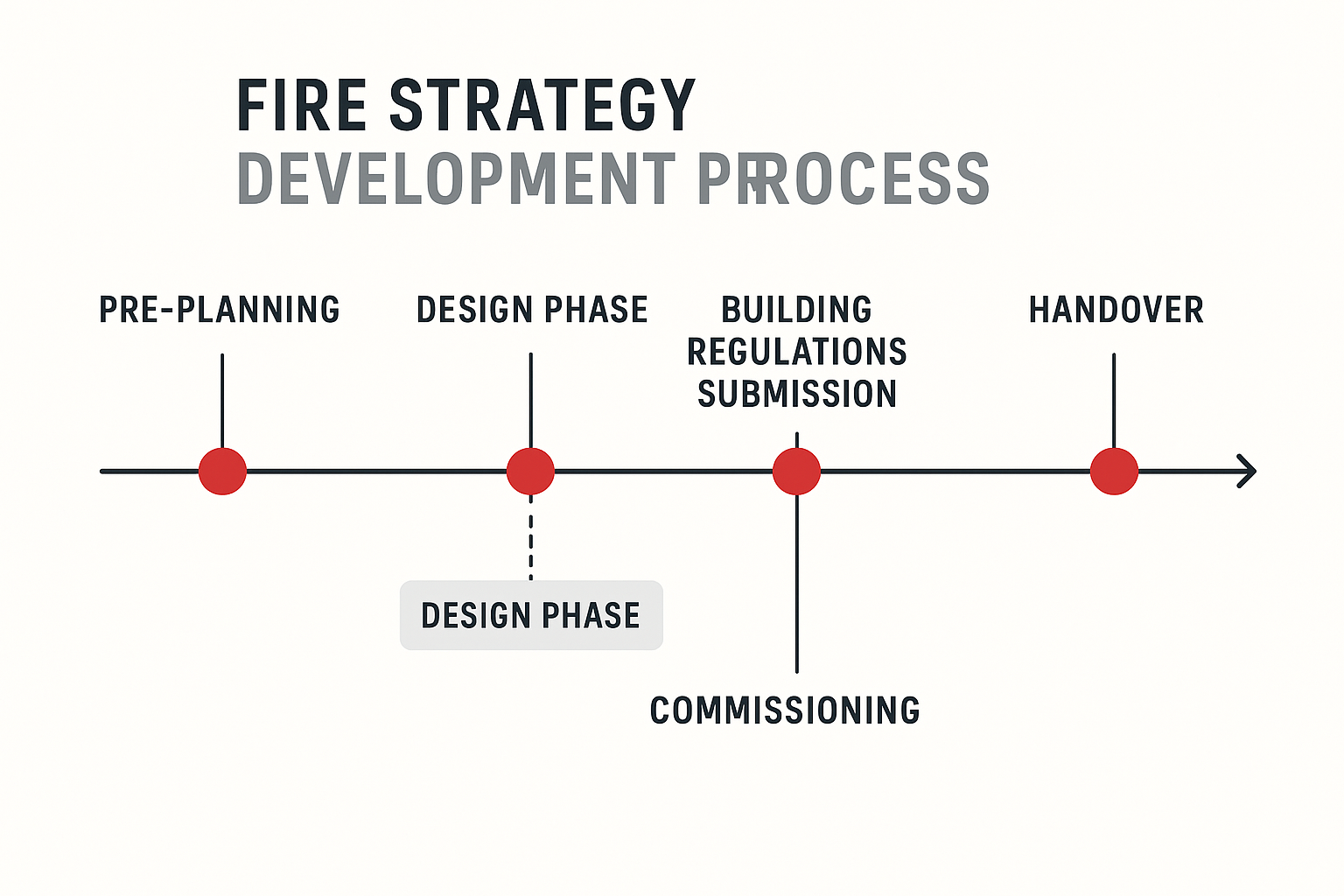
The Fire Strategy Development Process
Creating a fire strategy isn’t a one-off task—it’s a structured process that runs parallel to building design:
- Pre-planning Stage: Initial fire strategy concepts developed alongside architectural plans
- Design Phase: Detailed fire engineering calculations and system specifications
- Building Regulations Submission: Formal submission to Building Control for approval
- Construction Phase: Regular reviews and updates as building progresses
- Commissioning: Testing and validation of all fire safety systems
- Handover: Final documentation package including Regulation 38 information
What is a Fire Risk Assessment?
A fire risk assessment is a systematic evaluation of fire hazards in an occupied building, focusing on identifying risks to people and implementing appropriate control measures. Unlike a fire strategy, an FRA deals with the reality of how a building is actually used, maintained, and managed.
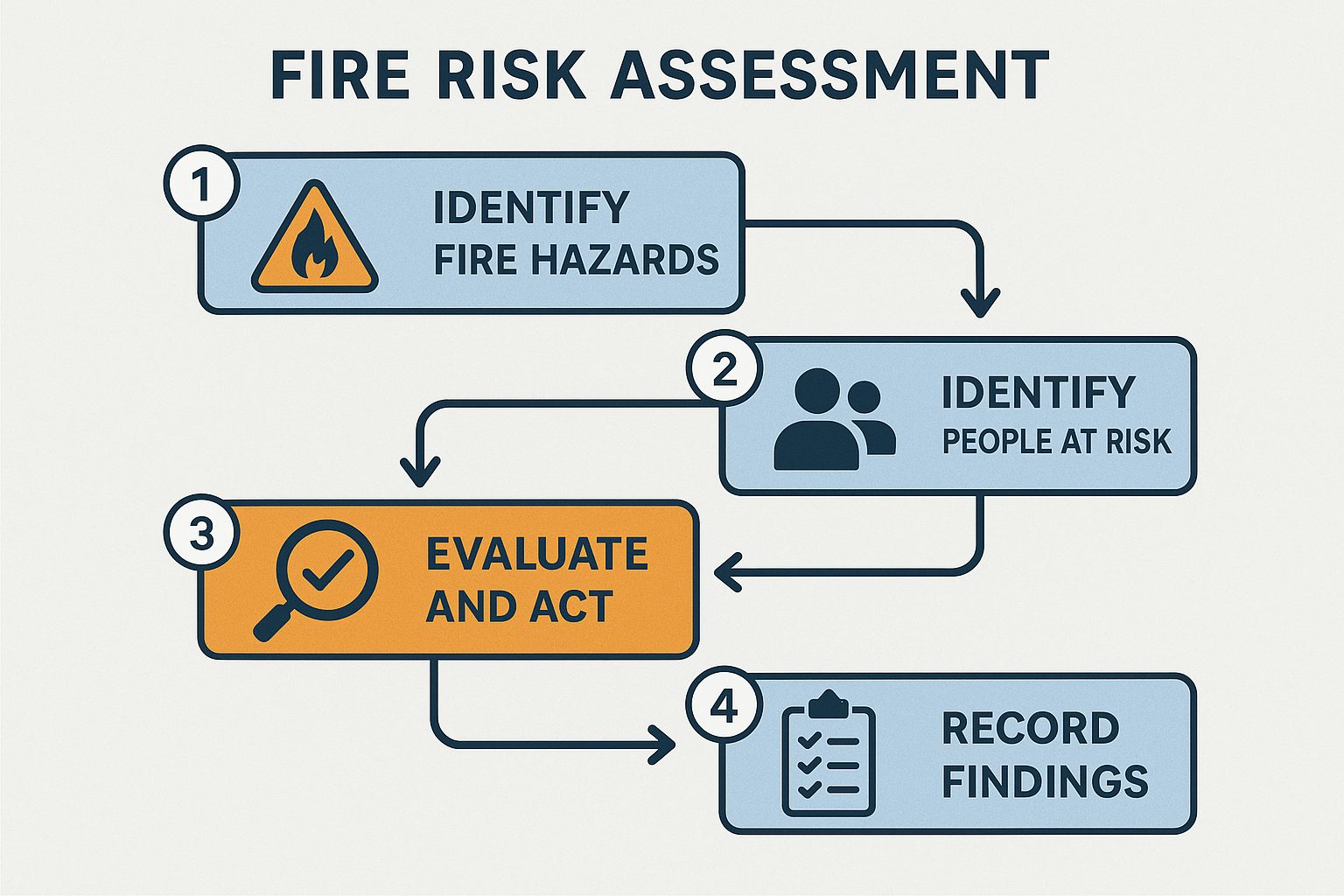
The Five-Step FRA Process
Understanding how to conduct a fire risk assessment involves following these essential FRA steps:
Step 1: Identify Fire Hazards
Assessors examine potential sources of ignition, fuel, and oxygen:
- Ignition sources: Electrical equipment, heating systems, cooking facilities, smoking materials
- Combustible materials: Furniture, waste storage, paper records, cleaning chemicals
- Oxygen sources: Ventilation systems, oxidising substances, compressed gases
Step 2: Identify People at Risk
Special consideration must be given to vulnerable occupants:
- Employees working alone or in isolated areas
- Visitors unfamiliar with the building layout
- People with disabilities or mobility issues
- Young persons under 18 or elderly occupants
- Contractors and temporary workers
Step 3: Evaluate Risks and Implement Controls
The assessment must calculate risk levels and determine appropriate measures:
- Assess likelihood and potential consequences of fire
- Evaluate existing control measures’ effectiveness
- Identify additional precautions needed
- Prioritise actions based on risk severity
Step 4: Record Findings and Create Action Plans
Documentation requirements include:
- Significant findings and actions taken
- Fire safety management plans
- Emergency procedures and evacuation plans
- Training records and fire marshal responsibilities
Step 5: Review and Update Regularly
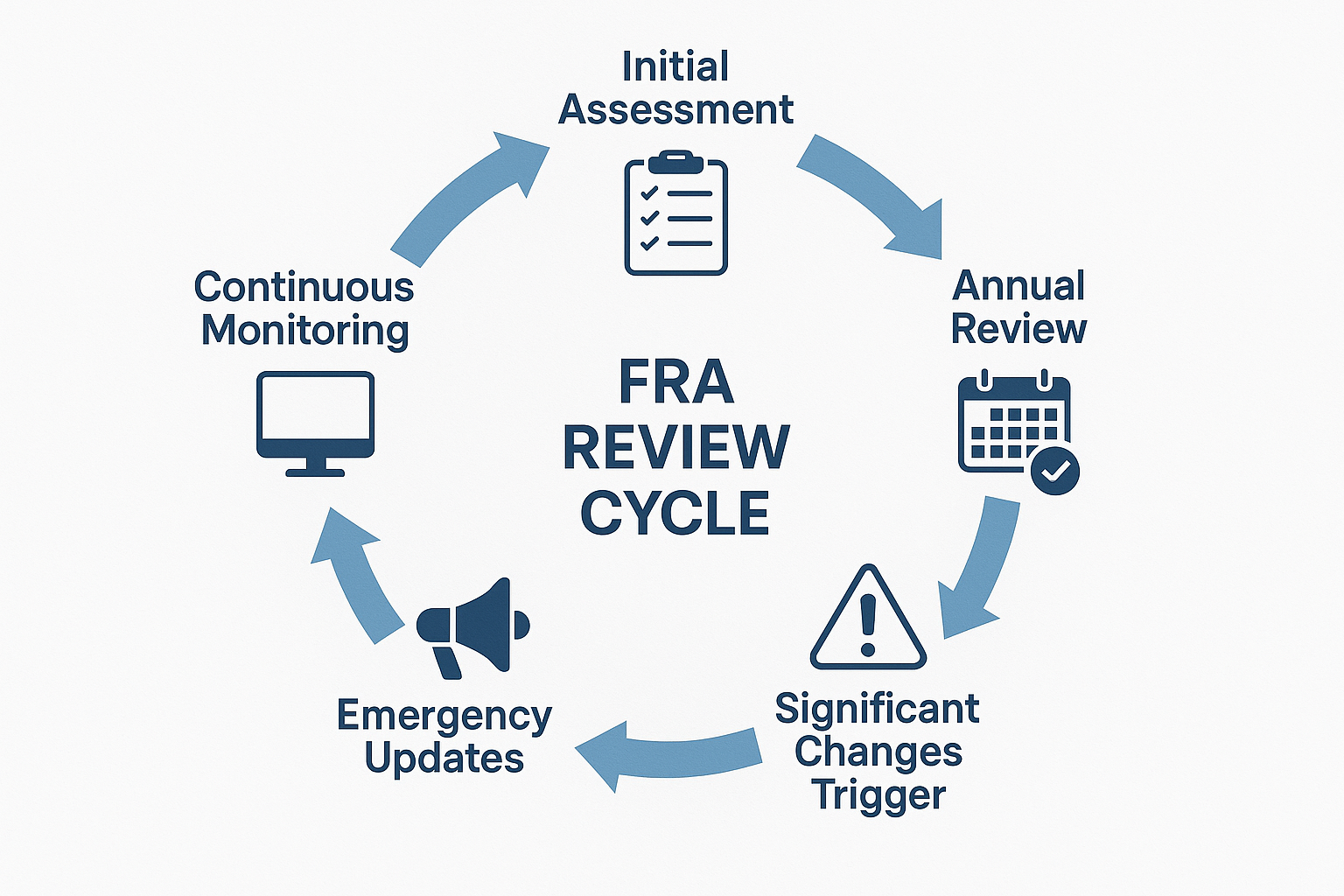
Regular reviews ensure continued effectiveness:
- How often assessments should be reviewed depends on risk levels
- Significant changes trigger immediate reviews
- Annual reviews are the minimum standard for most premises
Types of Fire Risk Assessments
Different property types require tailored approaches:
- HMO Fire Risk Assessments: Focus on shared facilities and multiple occupancy risks
- Fire Risk Assessments for Flats: Address compartmentation and stay-put policies
- Office Fire Risk Assessments: Consider workplace-specific hazards and equipment
- Holiday Let Fire Risk Assessments: Account for unfamiliar guests and seasonal variations
Key Differences Explained
Understanding the fundamental differences between fire strategy and risk assessment helps ensure comprehensive fire safety compliance.
Purpose and Timing: The Critical Distinction
Fire Strategy: Created before construction begins, a fire strategy is forward-looking and theoretical. It asks, “How will this building be designed to protect people from fire?” The document guides architects, engineers, and contractors in building fire safety into the structure from day one.
Fire Risk Assessment: Conducted after occupation, an FRA is retrospective and practical. It asks, “What does a fire risk assessment do in the real world?” The answer: it evaluates actual risks based on how people use the building, what they store there, and how well fire safety measures are maintained.
Legal Framework: Different Rules, Different Penalties
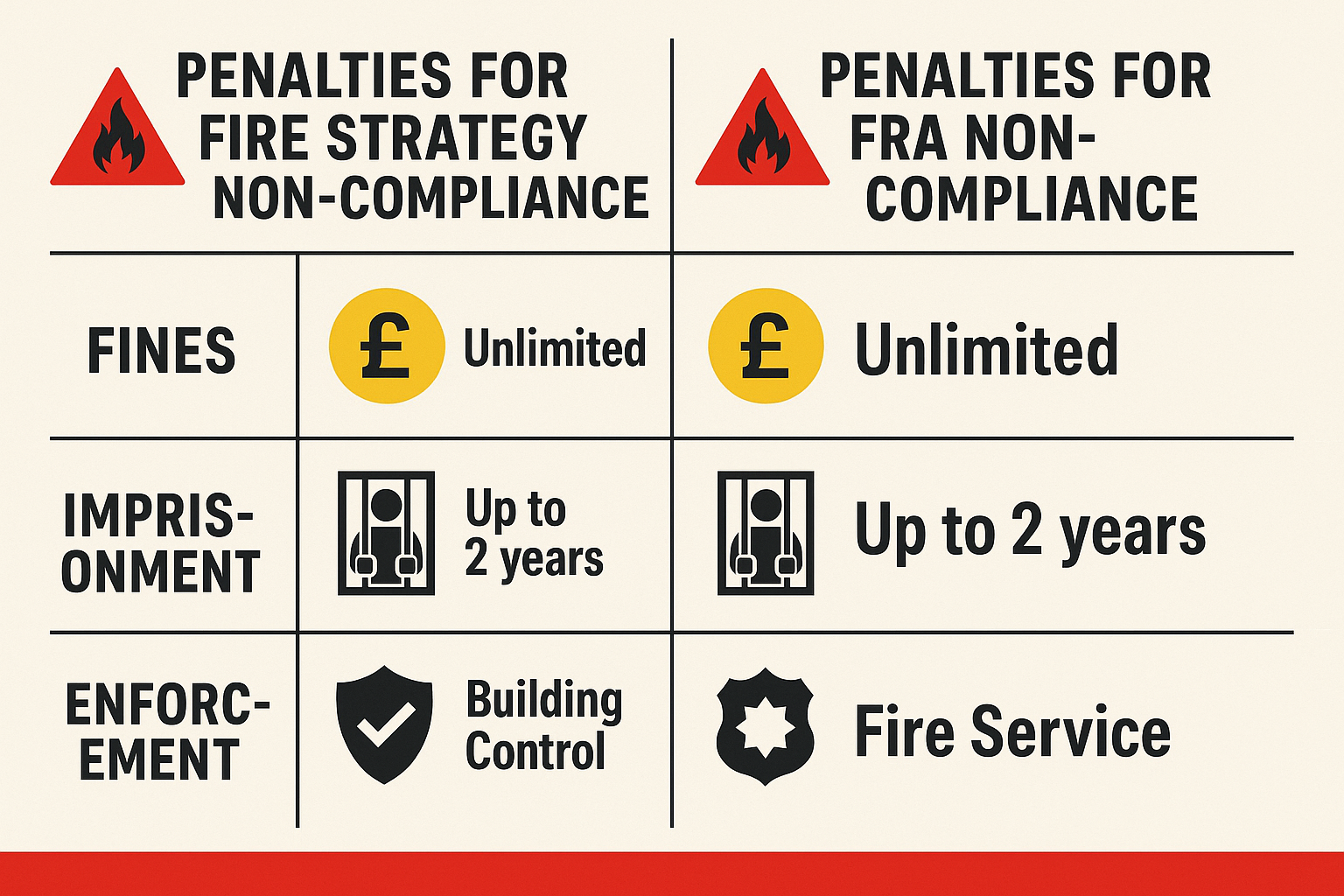
The legal basis for each document differs significantly:
Fire Strategy Compliance:
- Governed by Building Regulations, specifically Part B regulations
- Enforced by Building Control Bodies and the Building Safety Regulator
- Required for building control approval and occupation certificates
- Part of Regulation 38 fire safety information package
Fire Risk Assessment Compliance:
- Mandated by the Regulatory Reform (Fire Safety) Order 2005
- Enforced by Fire and Rescue Services
- Subject to regular inspections and audits
- Criminal penalties for non-compliance including unlimited fines and up to 2 years imprisonment
Professional Requirements: Who Can Do What?
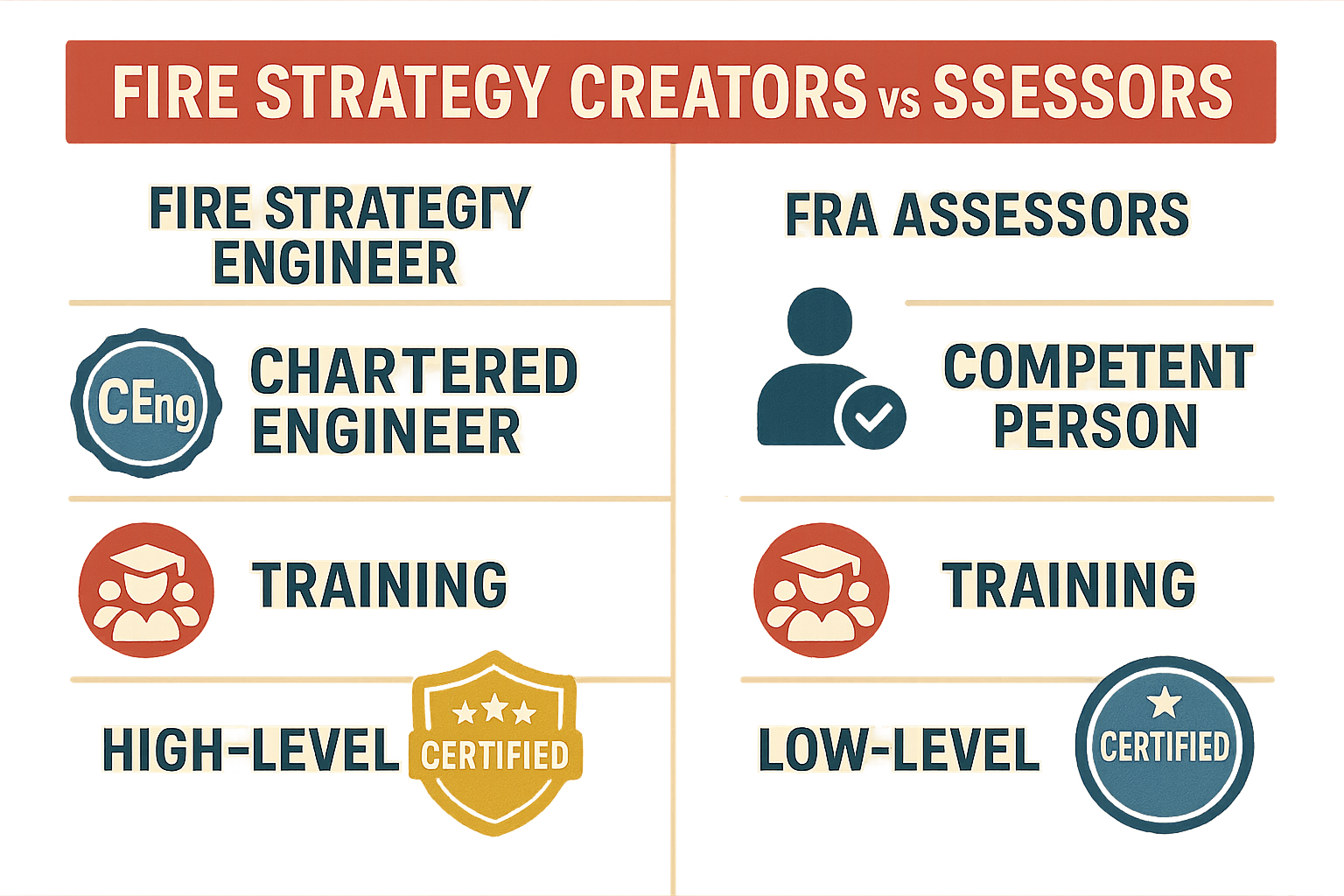
Fire Strategy Professionals:
- Must be chartered fire engineers or equivalent
- Require extensive technical qualifications and experience
- Subject to professional indemnity insurance requirements
- Regulated by professional engineering bodies
Fire Risk Assessment Professionals:
- Who can carry out fire risk assessments varies by building complexity
- Can include competent persons with appropriate training
- Third-party accredited assessors required for high-risk buildings
- In-house trained staff acceptable for simple premises
Document Lifecycle: Creation to Retirement
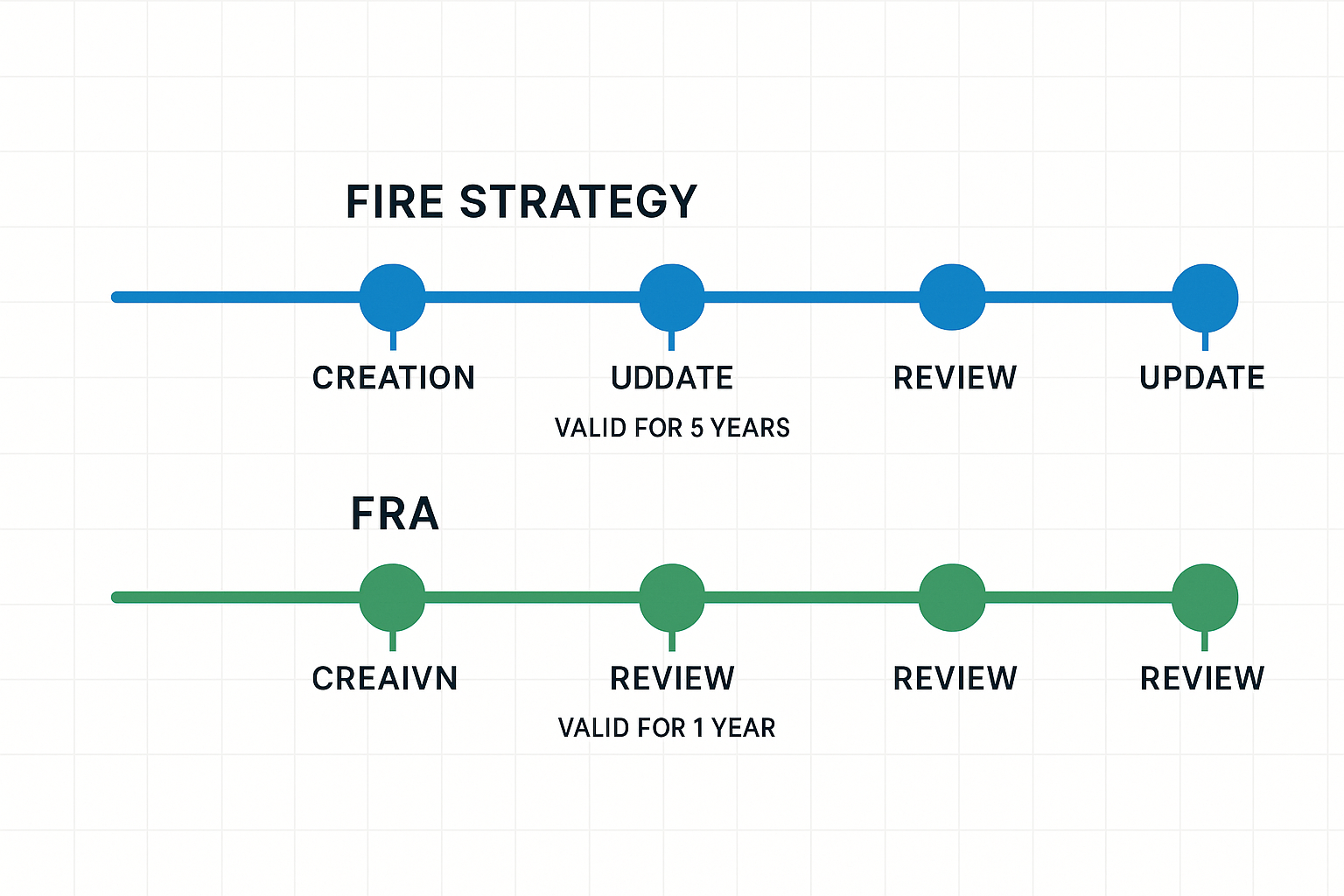
Fire Strategy Lifecycle:
- Created once during design phase
- Updated only for significant alterations or change of use
- Remains valid throughout building’s unchanged operational life
- Forms part of building’s permanent “golden thread” records
Fire Risk Assessment Lifecycle:
- Initial assessment required before occupation
- Regular reviews (minimum annually, often more frequently)
- Immediate updates required for significant changes
- Living document requiring constant maintenance and updates
When You Need Each Document
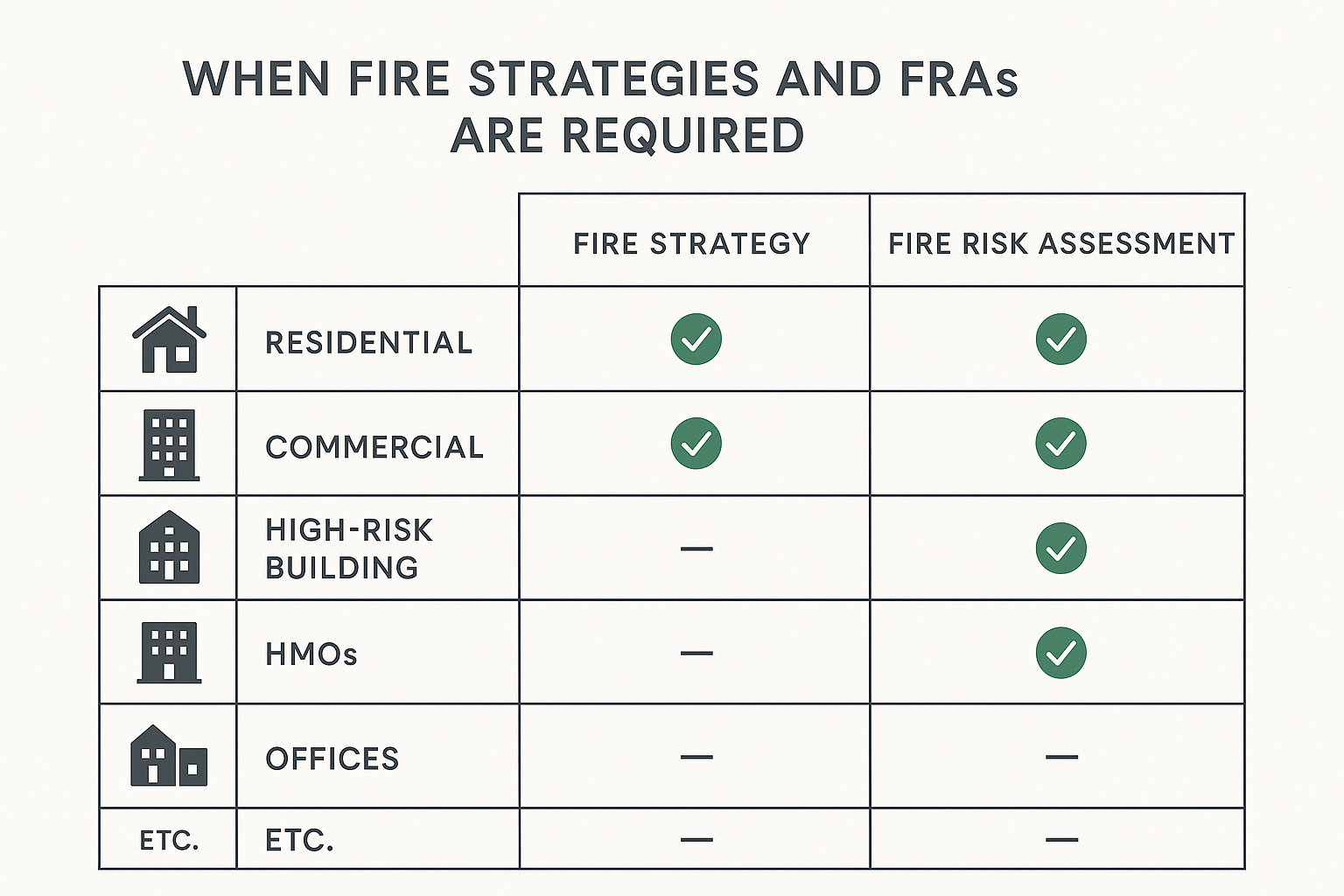
Knowing when you need a fire strategy versus when you need a fire risk assessment can save you from costly compliance failures and legal issues.
When a Fire Strategy is Mandatory
Fire strategies are essential in these scenarios:
New Construction Projects
Every new building requires a fire strategy to demonstrate Building Regulations compliance:
- All residential developments regardless of size
- Commercial buildings and mixed-use developments
- Industrial facilities and warehouses
- Educational and healthcare buildings
High-Risk Buildings Under the Building Safety Act
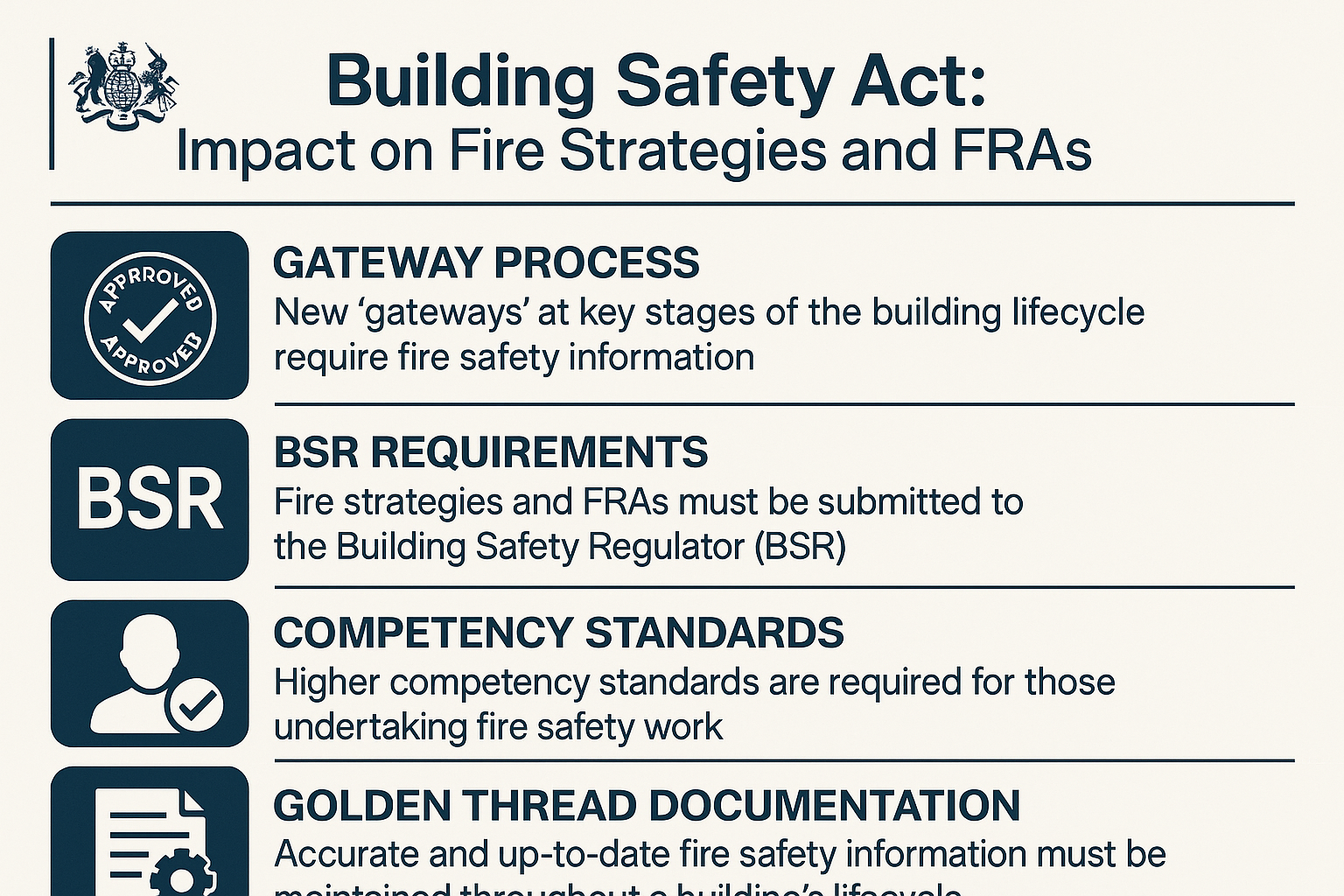
The Building Safety Act has made fire strategies mandatory for:
- Buildings over 18m in height (approximately 6 storeys)
- Residential buildings with 7 or more storeys
- Buildings with complex evacuation requirements
- Structures with unusual fire risks or innovative designs
Major Alterations and Change of Use
Existing buildings need updated fire strategies when:
- Changing the building’s use class (e.g., office to residential)
- Adding additional storeys or significant extensions
- Altering escape routes or compartmentation
- Modifying fire safety systems significantly
- Installing new fire safety technologies
When a Fire Risk Assessment is Required
Fire risk assessments become legally required in these circumstances:
All Non-Domestic Premises
Every workplace must have an FRA, including:
- Offices, shops, and retail premises
- Factories, warehouses, and industrial sites
- Hotels, hostels, and guest accommodation
- Educational establishments and training centers
- Healthcare facilities and care homes
- Places of entertainment and leisure facilities
Residential Properties with Common Areas
Specific residential situations requiring FRAs:
- Common areas of flats and maisonettes
- HMO properties with shared facilities
- Residential care premises and nursing homes
- Sheltered housing and supported living
- Holiday lets and short-term rentals
Documentation Requirements
Written FRAs are mandatory when:
- You employ 5 or more people
- The premises require a licence (HMO, care home, etc.)
- An alterations notice is in force
- Fire authorities specifically request documentation
Legal Requirements and Compliance
The legal landscape for fire safety in the UK has evolved significantly, with 2,972 enforcement notices issued in the latest reporting period—a 5.3% increase year-on-year. Understanding your legal obligations for both fire strategies and fire risk assessments is essential to avoid criminal prosecution.
Fire Strategy Legal Framework
Building Regulations Compliance
Fire strategies must comply with Approved Document B, which sets out fire safety requirements for:
- Means of warning and escape
- Internal fire spread (linings and structure)
- External fire spread prevention
- Access and facilities for fire services
The Building Safety Act Impact
Since the Building Safety Act came into force:
- Gateway 2 Submissions: High-risk buildings must submit detailed fire strategies before construction
- Competency Requirements: Only qualified professionals can sign off fire strategies
- Golden Thread: Digital record-keeping of all fire safety information throughout the building’s life
- BSR Oversight: Building Safety Regulator has enhanced powers to review and reject inadequate strategies
Recent Regulatory Changes
March 2024 brought significant updates to Part B Building Regulations:
- Second staircase requirements for buildings over 18m
- Enhanced evacuation provisions for disabled persons
- Stricter external wall system requirements
- Improved fire service access provisions
Fire Risk Assessment Legal Requirements
The Regulatory Reform (Fire Safety) Order 2005
This order makes fire risk assessments a legal requirement with severe penalties for non-compliance:
- Unlimited fines for serious breaches
- Up to 2 years imprisonment for responsible persons
- Enforcement notices requiring immediate action
- Prohibition notices that can close premises
Who is the “Responsible Person”?
The law places duties on the “responsible person” who must:
- Ensure a suitable and sufficient fire risk assessment is carried out
- Implement appropriate fire safety measures
- Provide information, instruction, and training to employees
- Maintain fire safety equipment and systems
For most premises, this is:
- The employer (if workplace)
- The owner or landlord (if residential common areas)
- The person with control of the premises
- Anyone with specific fire safety responsibilities in their contract
Professional Requirements and Qualifications
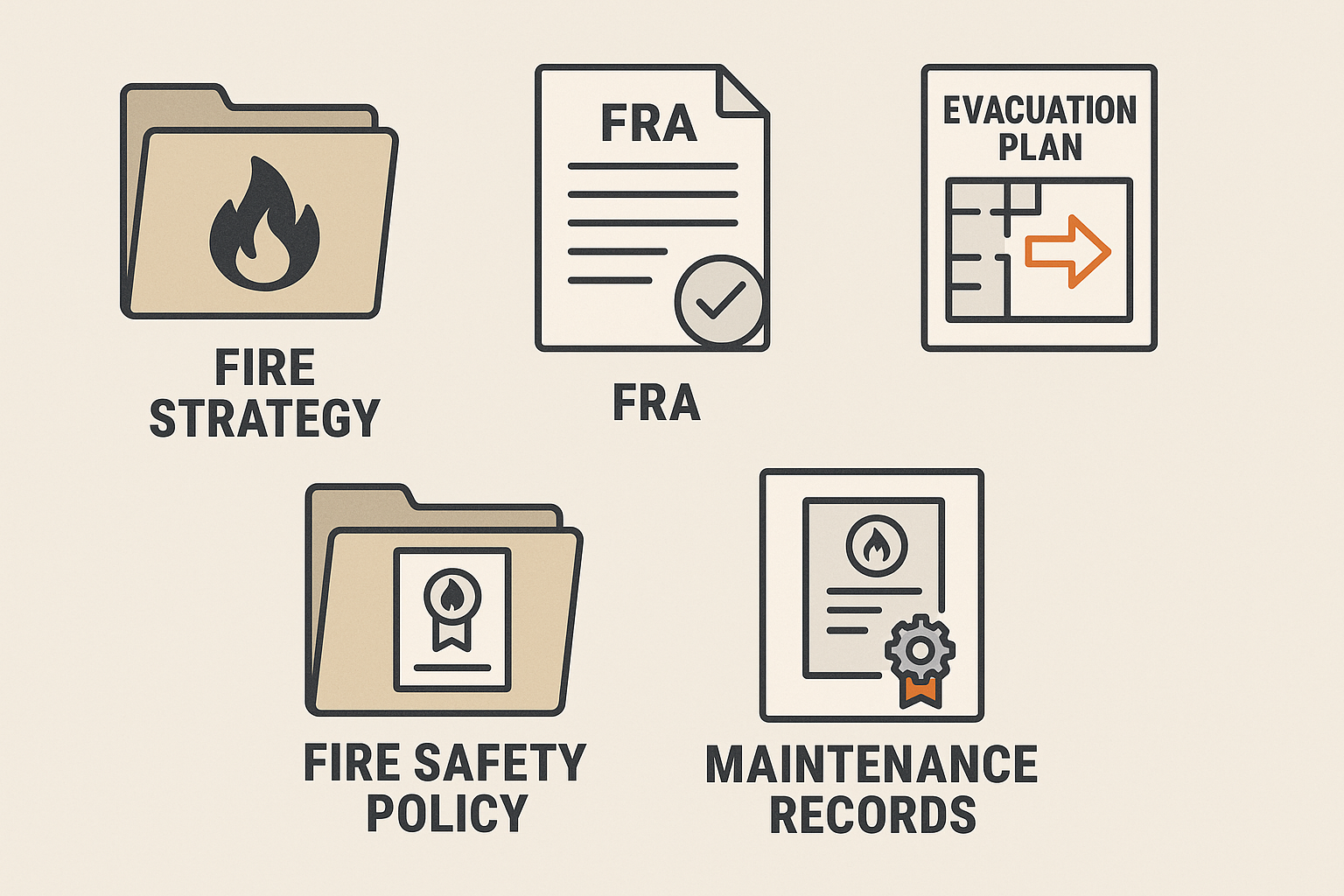
The professional standards for creating fire strategies and conducting fire risk assessments have become increasingly stringent, particularly following the Building Safety Act and various high-profile fire incidents.
Fire Strategy Professional Standards
Chartered Engineer Requirements
Fire strategies for complex buildings must be prepared by:
- Chartered Fire Engineers with Institution of Fire Engineers (IFE) membership
- Chartered Engineers with relevant fire safety specialization
- Incorporated Engineers with appropriate fire safety qualifications
- Technician Engineers working under chartered engineer supervision
Competency Frameworks
The Building Safety Regulator has established competency requirements covering:
- Technical knowledge of fire engineering principles
- Understanding of Building Regulations and standards
- Experience with similar building types and complexities
- Continuing professional development requirements
- Professional indemnity insurance coverage
Fire Risk Assessment Competency
Competent Person Definition
Who can carry out fire risk assessments depends on building complexity:
Simple Premises (small offices, shops):
- In-house trained staff with appropriate qualifications
- Persons with relevant fire safety training courses
- Those with practical fire safety experience
Complex Premises (high-rise, hospitals, schools):
- Third-party certified fire risk assessors
- Persons with formal fire safety qualifications
- Those with extensive experience in similar premises
Training and Certification
Recognized qualifications include:
- NEBOSH Fire Safety certificates
- Institution of Fire Engineers qualifications
- IOSH Fire Safety courses
- Accredited fire risk assessor schemes
Cost Comparison: Investment vs Compliance
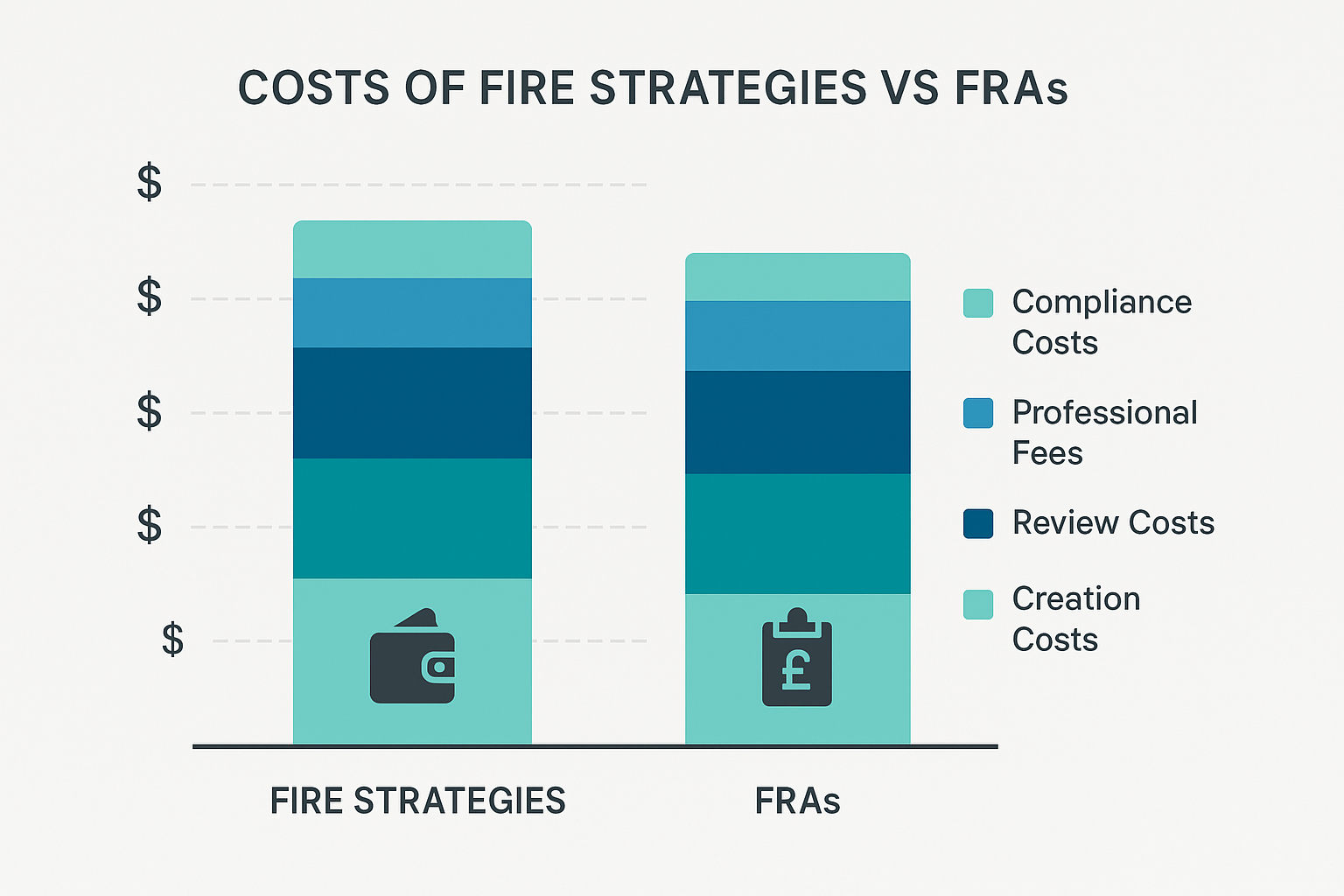
Understanding the financial implications of fire strategies versus fire risk assessments helps with budgeting and compliance planning.
Fire Strategy Costs
Typical Price Ranges:
- Simple buildings: £1,500 – £5,000
- Medium complexity: £5,000 – £25,000
- High-rise/complex: £25,000 – £115,000+
Factors Affecting Cost:
- Building height and floor area
- Complexity of use and occupancy
- Number of fire safety systems
- Innovative design features
- Regulatory submission requirements
Fire Risk Assessment Costs
Typical Price Ranges:
- Small premises: £300 – £800
- Medium premises: £800 – £3,500
- Large/complex premises: £3,500 – £15,000+
Ongoing Costs:
- Annual reviews: 50-75% of initial cost
- Significant change reviews: 25-50% of initial cost
- Emergency updates: £200 – £1,000
Return on Investment Considerations
Fire Strategy ROI:
- Essential for building approval and occupation
- Prevents costly design changes during construction
- Reduces insurance premiums
- Protects against regulatory enforcement
Fire Risk Assessment ROI:
- Legal compliance and criminal liability protection
- Reduced insurance premiums
- Improved staff safety and confidence
- Protection against civil claims
Common Mistakes and How to Avoid Them
Fire Strategy Mistakes
1. Late Engagement
Many developers engage fire engineers too late in the design process, leading to:
- Costly design changes
- Delayed building control approval
- Increased construction costs
- Potential project delays
Solution: Engage fire engineers during initial design stages.
2. Inadequate Documentation
Failing to provide comprehensive fire strategy documentation results in:
- Building control rejection
- BSR Gateway failures
- Handover delays
- Compliance issues
Solution: Ensure complete documentation packages including calculations, drawings, and specifications.
Fire Risk Assessment Mistakes
1. Generic Assessments
Using template assessments without proper site-specific evaluation leads to:
- Inadequate risk identification
- Inappropriate control measures
- Regulatory enforcement action
- Increased liability exposure
Solution: Ensure assessments are tailored to specific premises and uses.
2. Infrequent Reviews
Failing to review assessments regularly results in:
- Outdated risk evaluations
- Non-compliance with legal requirements
- Increased fire risks
- Potential prosecution
Solution: Establish regular review schedules and change management procedures.
The Future of Fire Safety Documentation
Emerging Trends
Digital Integration:
- Building Information Modeling (BIM) integration
- Digital fire safety management systems
- Real-time monitoring and reporting
- Cloud-based documentation storage
Enhanced Competency Requirements:
- Stricter professional qualifications
- Mandatory continuing professional development
- Regular competency assessments
- Professional registration schemes
Regulatory Developments
Building Safety Act Implementation:
- Extended Gateway processes
- Enhanced BSR powers
- Stricter competency requirements
- Digital golden thread requirements
Fire Safety Act Impact:
- Extended FRA requirements for residential buildings
- Enhanced responsible person duties
- Improved enforcement powers
- Stricter penalties for non-compliance
Conclusion: Getting Both Documents Right
The distinction between fire strategies and fire risk assessments isn’t just academic—it’s fundamental to building safety and legal compliance. Both documents serve essential but different purposes in protecting building occupants from fire.
Key Takeaways
Fire strategies are your building’s fire safety DNA—embedded during design and construction to create inherently safe structures. They’re technical, permanent, and focused on engineering solutions.
Fire risk assessments are your operational safety health checks—ongoing evaluations that ensure fire safety measures work in the real world with real people and real activities.
Your Action Plan
- For new buildings: Engage fire engineers early for comprehensive fire strategy development
- For existing buildings: Ensure current, site-specific fire risk assessments are in place
- For all premises: Establish regular review and update procedures
- For complex buildings: Use appropriately qualified professionals for both documents
Professional Support
Both fire strategies and fire risk assessments require professional expertise. Don’t risk non-compliance or, more importantly, occupant safety by cutting corners on professional fire safety advice.
For comprehensive fire safety support, including professional fire risk assessments, fire strategy services, and ongoing compliance management, engage qualified professionals who understand both the technical requirements and legal obligations.
The investment in proper fire safety documentation isn’t just about compliance—it’s about creating buildings where people can live, work, and visit safely, knowing that comprehensive fire protection measures are in place and properly maintained.